Tim Braden
In the eponymous painting Contre-Jour, 2026, the kaleidoscopic nature of Tim Braden’s practice comes together. The still life depicts his desk in his former studio, covered with postcards, articles, photographs, and, of course, his painting tools. In the upper left corner, a postcard reproduces Baie de Naples, a 1909 painting by Albert Marquet. It has been a companion and inspiration to Braden for more than twenty-five years, reminding him daily of his discovery of Marquet’s work at the Hermitage Museum in St. Petersburg in the 1990s, while studying art there. Among the other images pinned to the bulletin board, the attentive viewer can notice works by Richard Diebenkorn, Pierre Bonnard, and Raoul Dufy.
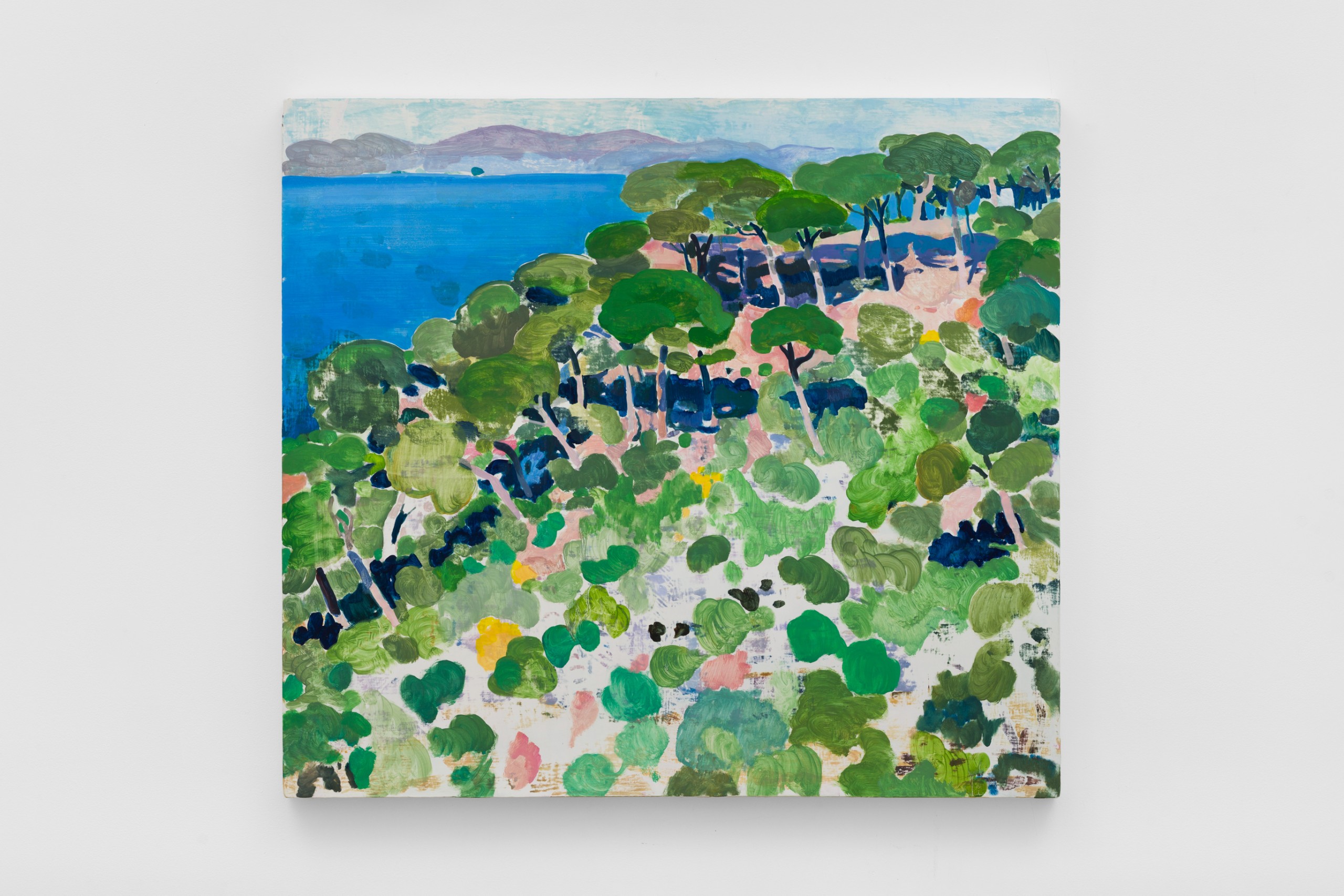
The importance of homage in Braden’s practice cannot be overstated. Contre-Jour is therefore a particularly telling work. Paying tribute to predecessors and peers is an integral part of his practice, whether through subtle references or through the age-old painterly inside joke of depicting another artist’s painting, as David Hockney famously did with works by Gauguin. Braden embraces these references as a way of conveying the experience of being inspired by other artists. His profound and deeply felt admiration for those who came before him is tangible throughout his work. We see echoes of Marquet’s coastal views in Tangier from villa Mabrouka, 2026, while Braden also goes beyond visual quotation, introducing artists such as Lois Dodd, Paul Klee, Wassily Kandinsky, and Anni and Josef Albers as characters within his paintings.
The love for other artists and the joy of discovery that come together in the title work continue throughout the exhibition. Braden refuses to limit himself, allowing the vitality and curiosity of his practice to branch out in multiple directions. “Limiting myself is horror. Humans change. Experiences change. Why would I not let my practice change as well?” he says. Contre-Jour, as exhibition, offers a representative glimpse of the range of his practice. Landscapes, portraits, and still lifes coexist with images of nature, both untamed and domesticated through garden views. The subjects shift constantly, but the freedom with which Braden moves between them is itself a defining characteristic of his work.
What ties these varied works together is Braden’s striking use of color. The warmth and nostalgia that permeate much of his work are rooted in his fascination with the colors of Super 8 film. Its saturation, soft focus, and subtle shifts in color recur throughout the exhibition, creating an intimate, almost home-movie-like quality that draws the viewer into the paintings. For Braden, particular colors are inseparable from the places and experiences they evoke: “Color is what we remember most about a place. I can see a specific color and it immediately brings me back to this particular stay in Greece, or that particular moment in time when I was 15 years old.” This associative power of color is fundamental to his practice. Colors are subjective and malleable, constantly reshaped by memory and perception.
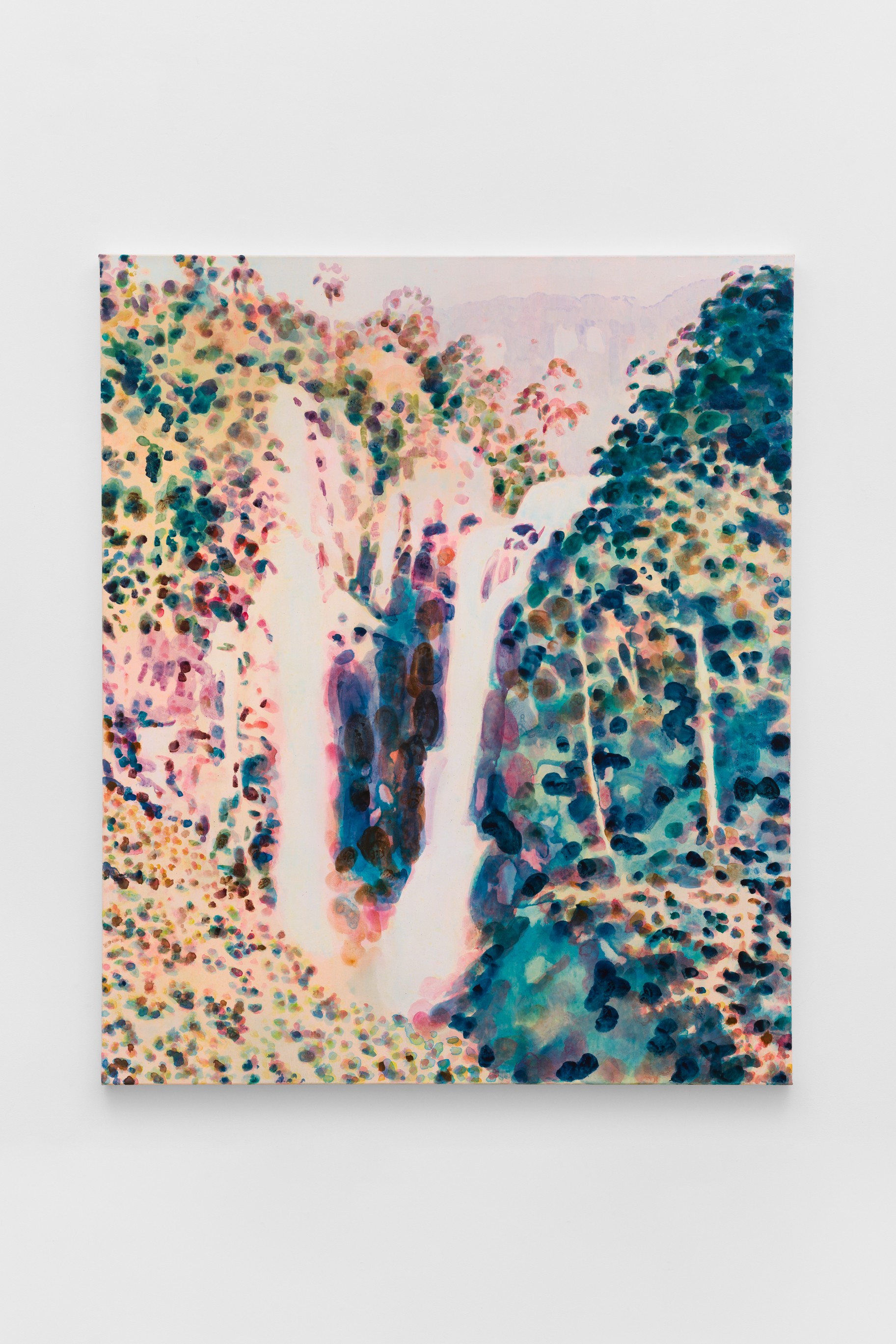
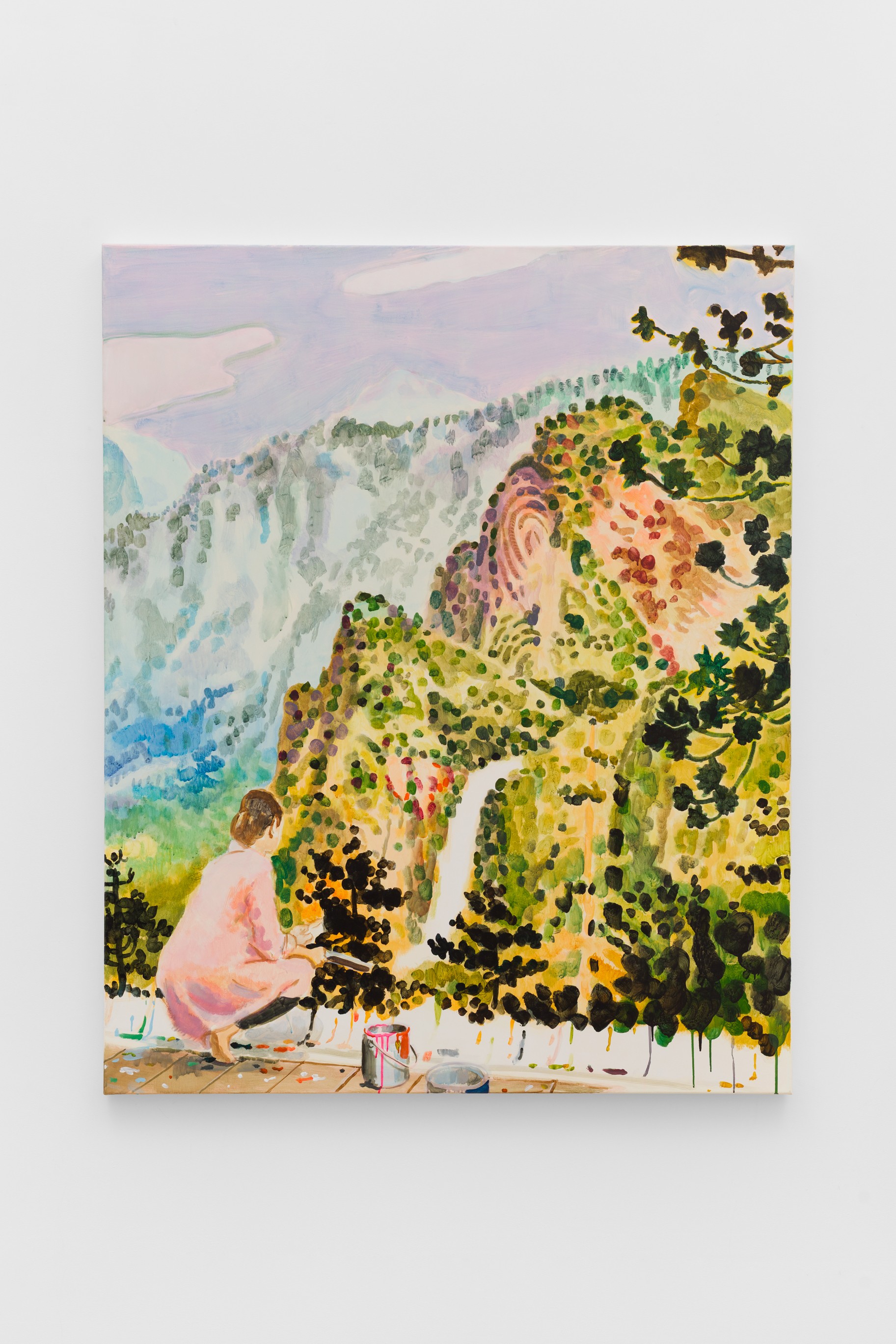
Association also provides a link between Braden’s figurative and abstract works. Just as memories can fade, losing their clarity and focus, some of his paintings move from recognizable imagery toward abstraction. At times, this happens through a process resembling the shifting focus of a camera lens, when an image momentarily slips out of focus or a lens flare interrupts the frame. The large diptych cadmium orange, pink, violet and greens, 2025, isolates and magnifies a detail from one of Braden’s larger landscape paintings, while the smaller Cadmium Orange, Violet, Magenta and Greens, 2025, appears to derive from a detail in Tiergarten in Colour, 2021. This constant movement between works is also evident in The Departure (raft), 2026, which playfully refers back to the raft, 2026. “I like plundering my own work. Stealing from myself. I like ideas to be polluted by other ideas.” This self-referential process allows Braden to pursue his practice in multiple directions without becoming constrained by the idea that a particular subject can only be represented in one way. As he puts it, “The technical challenge to reproduce a small mark in a large-scale painting keeps it interesting to me.”
The craftsmanship of the professions and makers of the past, which Braden greatly admires, is reflected in his own approach to painting. His particular form of craftsmanship lies in his ability to use gestures, lines, and marks sparingly while maintaining a striking clarity and recognizability. Like Matisse, who increasingly simplified his forms and flattened his pictorial spaces throughout his career, Braden distills his images into ensembles of carefully calibrated pictorial signs. These signs retain enough information to make their subjects immediately recognizable, while requiring a certain visual intelligence from the viewer. In Braden’s work, looking becomes an act of association, recognition, and discovery.
Tim Braden (b. 1975, lives and works in London, UK) studied at Oxford University in Oxford, UK, at the Rijksakademie van Beeldende Kunsten in Amsterdam, NL and the St. Petersburg Academy of Art in St. Petersburg, RU. Braden has had recent solo exhibitions at McClain Gallery, Houston, TX, US; RYAN LEE, New York, NY, US and Frestonian Gallery, London, UK. His group exhibitions include Nino Mier Gallery, New York, US; David Zwirner, NY, US; Van Gogh Museum, Amsterdam, NL; Martos Gallery, New York, NY, US; Nicodim Gallery, Los Angeles, CA, US; Tristan Hoare Gallery, London, UK and TJ Boulting, London, UK. Contre-Jour is his first solo exhibition with Nino Mier Gallery.
Contre-Jour
Downtown - Gallery
Tuesday - Saturday, 10-18h
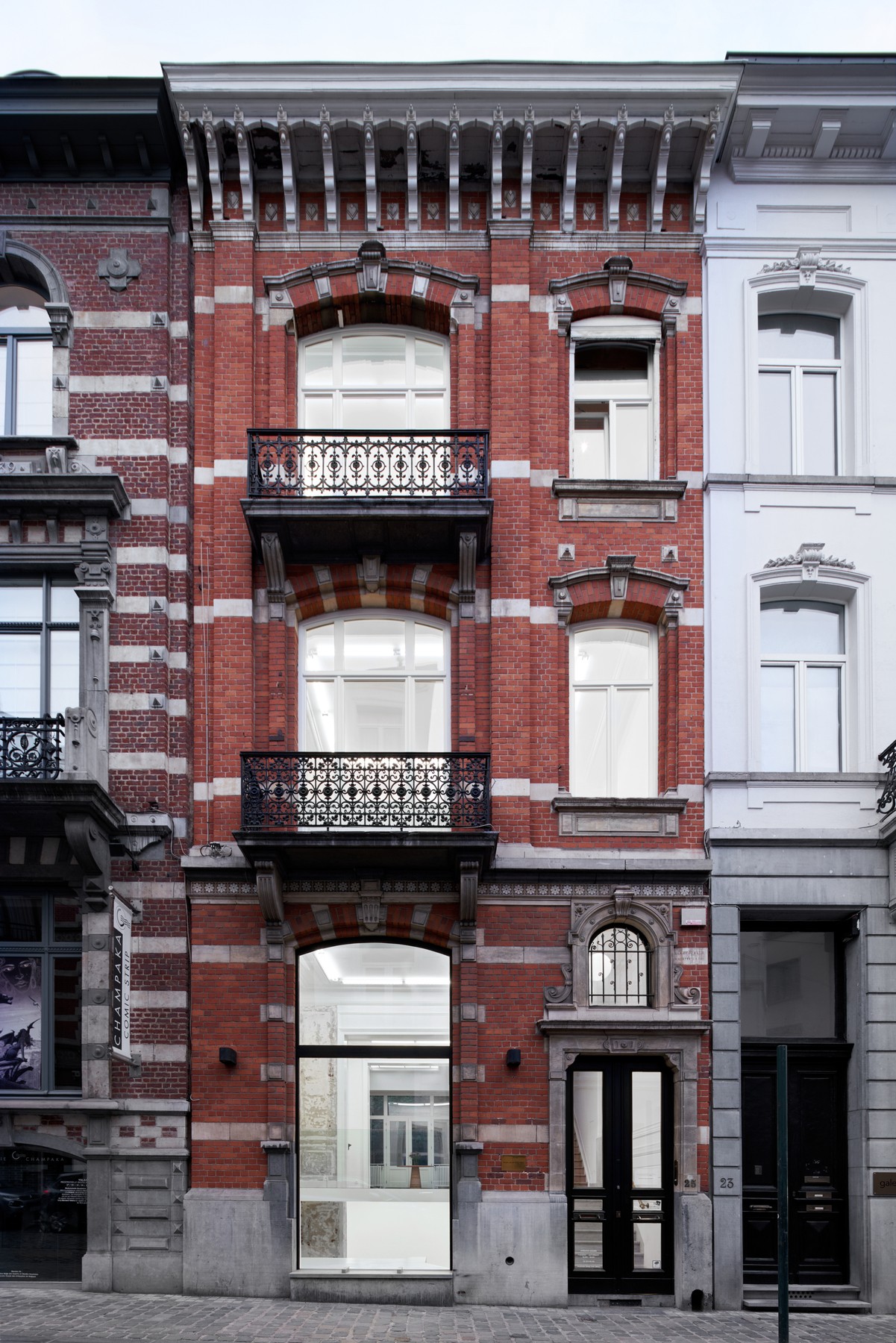
Rue Ernest Allard 25, 1000 Bruxelles
Visit the website
Nino Mier Gallery is a contemporary art gallery with spaces in New York City, New York; and Brussels, Belgium. The gallery maintains a roster of established and emerging artists, predominantly focused on painting, but with an emphasis on sculpture and photography as well.
Nino Mier opened his first gallery in 2015, following a successful career as a private dealer and art advisor. Driven by a desire to work more closely with artists and foster their growth, Mier launched a 500-square-foot space in West Hollywood. His vision was to challenge the established norms of the Los Angeles art scene and introduce artists who were largely unknown in the city at the time.
The inaugural exhibition featured Jan-Ole Schiemann, a promising young artist who, like Jana Schröder, Andreas Breunig, and Thomas Wachholz, studied at the renowned Kunstakademie Düsseldorf. These early exhibitions set the tone for the gallery, which quickly became known for showcasing emerging talent and artists with strong conceptual practices. Following the success of Schiemann’s debut, Mier continued to expand the gallery’s roster, adding artists such as Anke Weyer and André Butzer.