Louis-Cyprien Rials
Galerie Eric Mouchet is pleased to present La Mémoire de la Matière, Louis-Cyprien Rials’s second solo exhibition, in its Brussels space. In parallel to this exhibition, the artist will benefit from a residency in December 2026 at Villa Empain - Fondation Boghossian.
For me, imagination is nothing more than an extension of matter, […] Roger Caillois, interview, 1978
Matter has no need of us to produce forms. Water, fractures, mineral deposits and time have been composing configurations of sometimes astonishing complexity for millions of years. Yet it takes a gaze for a line to become a horizon, for a stain to evoke a forest, or for a cross-section of stone to turn into a landscape. This gaze is never innocent: it carries the memory of the images, places, paintings and stories that have shaped our perception of the world.
Since 2007, Louis-Cyprien Rials has been exploring this encounter between the forms produced by matter and those that our imagination recognizes in it. His photographs of Pietra Paesina, enlarged to the scale of landscape, extend a long-standing fascination. From the Florentine Renaissance to the writings of Roger Caillois, figured stones have blurred the boundary between natural creation and artistic representation. They contain neither mountains nor cities, yet their organization sometimes seems to summon the entire history of painting. The image is born from this meeting between an intentionless geology and a visual culture that never ceases to seek out forms.
This relationship between matter and representation also runs through Après la nuit (2019), a contemplative journey through the extreme landscapes of East Africa. The mineral expanses of the Danakil and Lake Natron are answered by the rock paintings of Nyero and Laas Geel. In one case, humanity deliberately inscribes images on stone; in the other, it recognizes images in forms produced without intention. The film thus confronts the deep time of the Earth with the brevity of our presence, and the human desire to represent with the indifference of geological processes.
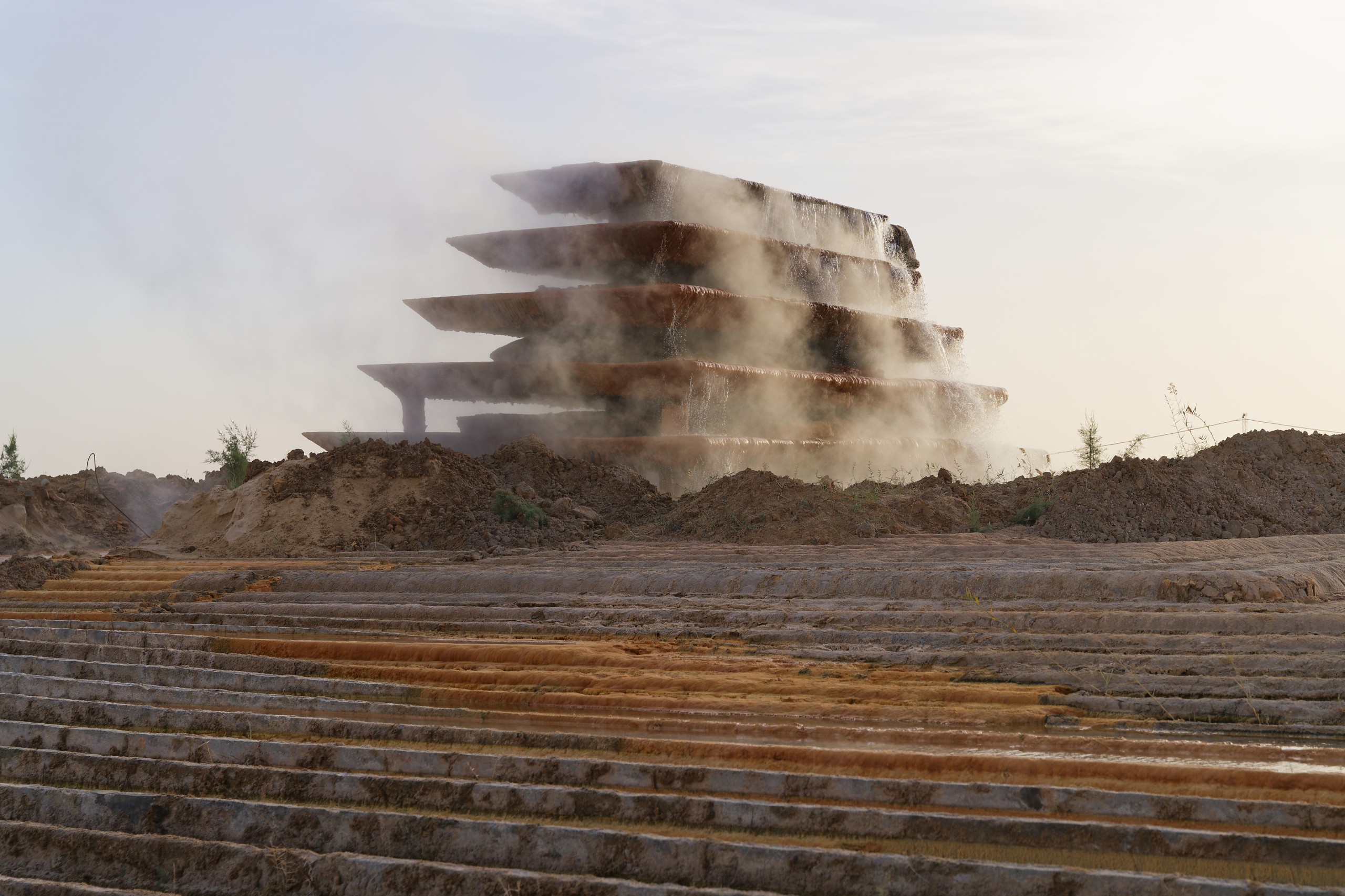
In Where Palms Survive (2026), this relationship becomes material and political. On the edge of the Tunisian desert, concrete structures cool the underground water that the oasis palm groves need to survive. Their brutalist geometry, their mineral deposits and their water-transformed surfaces compose landscapes whose strangeness sometimes seems artificial. These documentary photographs have been mistaken for generated images, just as some views of the Danakil photographed in 2019 have. Artificial intelligence now transforms even the way we look at images from the past: reality itself becomes suspect.
These authentic landscapes are answered by the black-and-white Polaroids of Synthetic Intimacy. Entirely generated and then transferred onto a real photographic medium, they evoke memories of places never visited. The palm tree, an ancient figure of paradise and abundance that has become an emblem of tourist exoticism, embodies here a longed-for, fantasized or dreamed elsewhere. Everyone can recognize something of their own story in these invented scenes. Why would an artificial memory be incapable of provoking an authentic emotion?
Yet these seemingly fragile and intimate images possess an invisible materiality. Their production mobilizes computing infrastructure, energy, water and mineral resources. While people organize the circulation of water to keep real palm trees alive, other infrastructures draw on the planet’s resources to produce their representations. This contradiction runs through the exhibition without resolving into judgment: the human desire to fabricate images itself belongs to the material processes that transform the world.
With Voyage en Chine, Al Nasla and the new mineral experiments, Rials continues this exploration of the shifts in perception. An inaccessible geography can be reconstructed from images; an improbable rock formation can inspire the idea of divine intervention; a machine can produce fictional geologies in which our gaze recognizes new landscapes. The techniques change, but what remains is this faculty of projecting an intention, a memory or a world into forms that do not necessarily possess any.
La Mémoire de la Matière thus offers a meditation on the continuities between geology, life, perception and creation. Matter produces forms. Certain organizations of matter make life possible. Life produces gazes, cultures and machines that in turn produce forms. This loop is no longer only a matter of the history of images: it engages our very belonging to the world.
Matter produces forms, but through life it also produces the gaze capable of marveling at them. Gaspard P. Turing
Opening: La Mémoire de la Matière
Westside - Gallery
Thursday to Saturday from 11:00-19:00
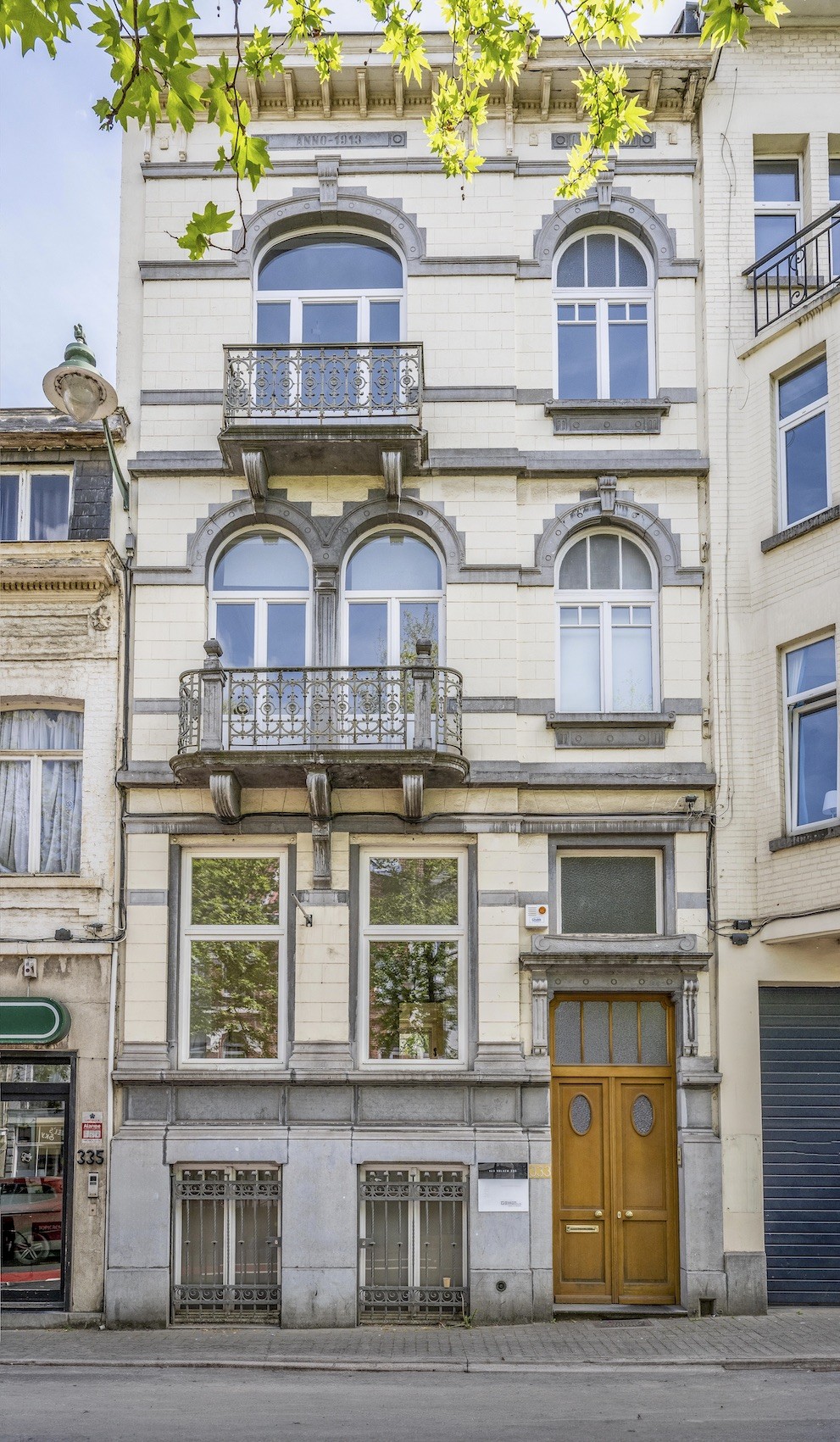
Av. Van Volxem 333, 1190 Forest
Visit the website
Galerie Eric Mouchet primarily represents young contemporary artists with forward-looking practices. Their research topics focus on geopolitics, sociology, ecology, social issues, and gender, without limitation to media or form. The gallery also has expertise in French and German historical avant-gardes, enabling connections between 20th-century art and contemporary art.
In 2022, the gallery opened a new space in Brussels at 333 Avenue Van Volxem in Forest, opposite the WIELS center. Housed in a 400 m2 bourgeois house with three exhibition floors and a sculpture garden, this space, in partnership with Galerie Martin Kudlek (Cologne) and Patrick Heide Contemporary Art (London), aims to create a European synergy. Born from the collaboration between Eric Mouchet and Martin Kudlek, the project promotes the circulation of artists and works, supported by collector Galila Barzilai Hollander.