Joost COLPAERT, Skender HYSENI
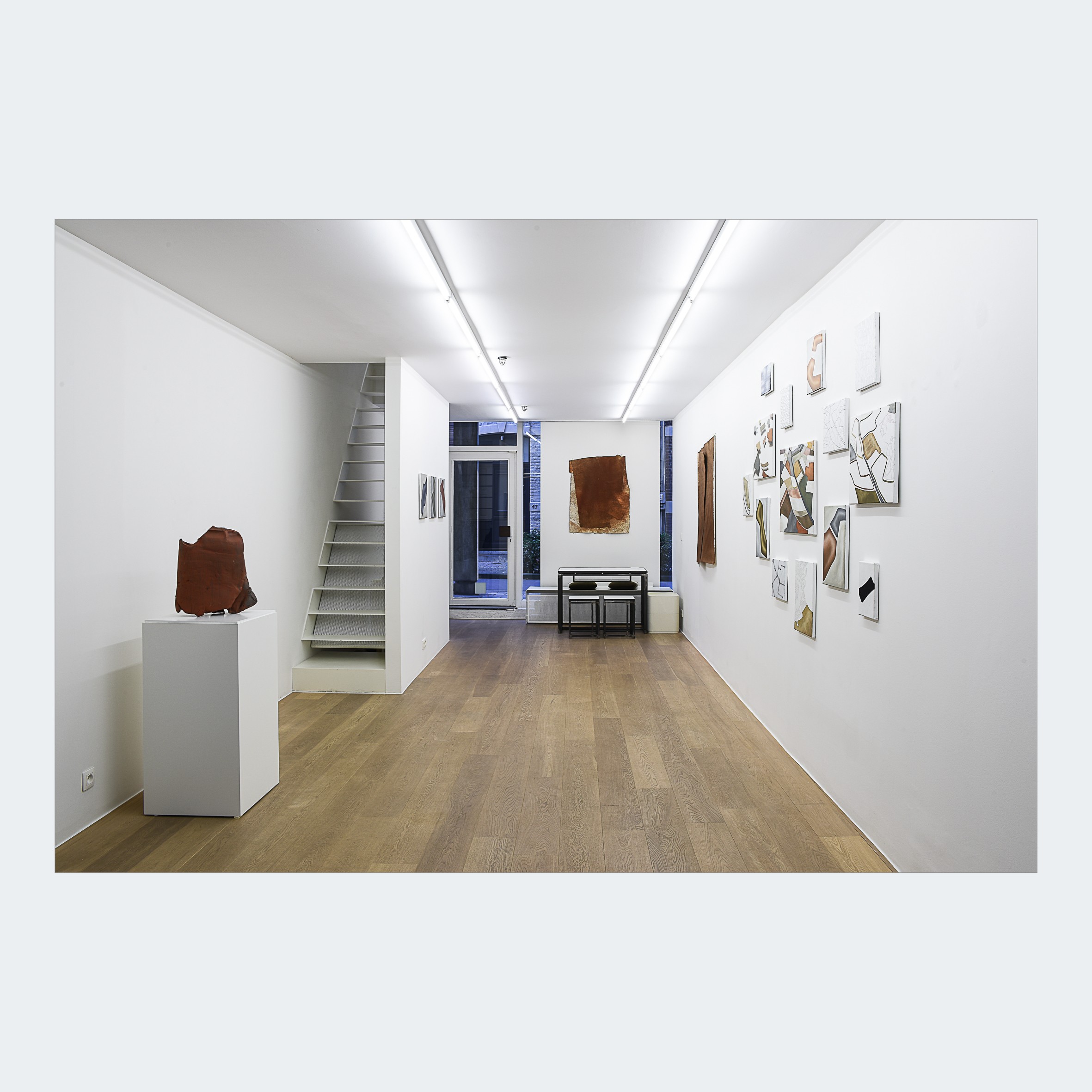
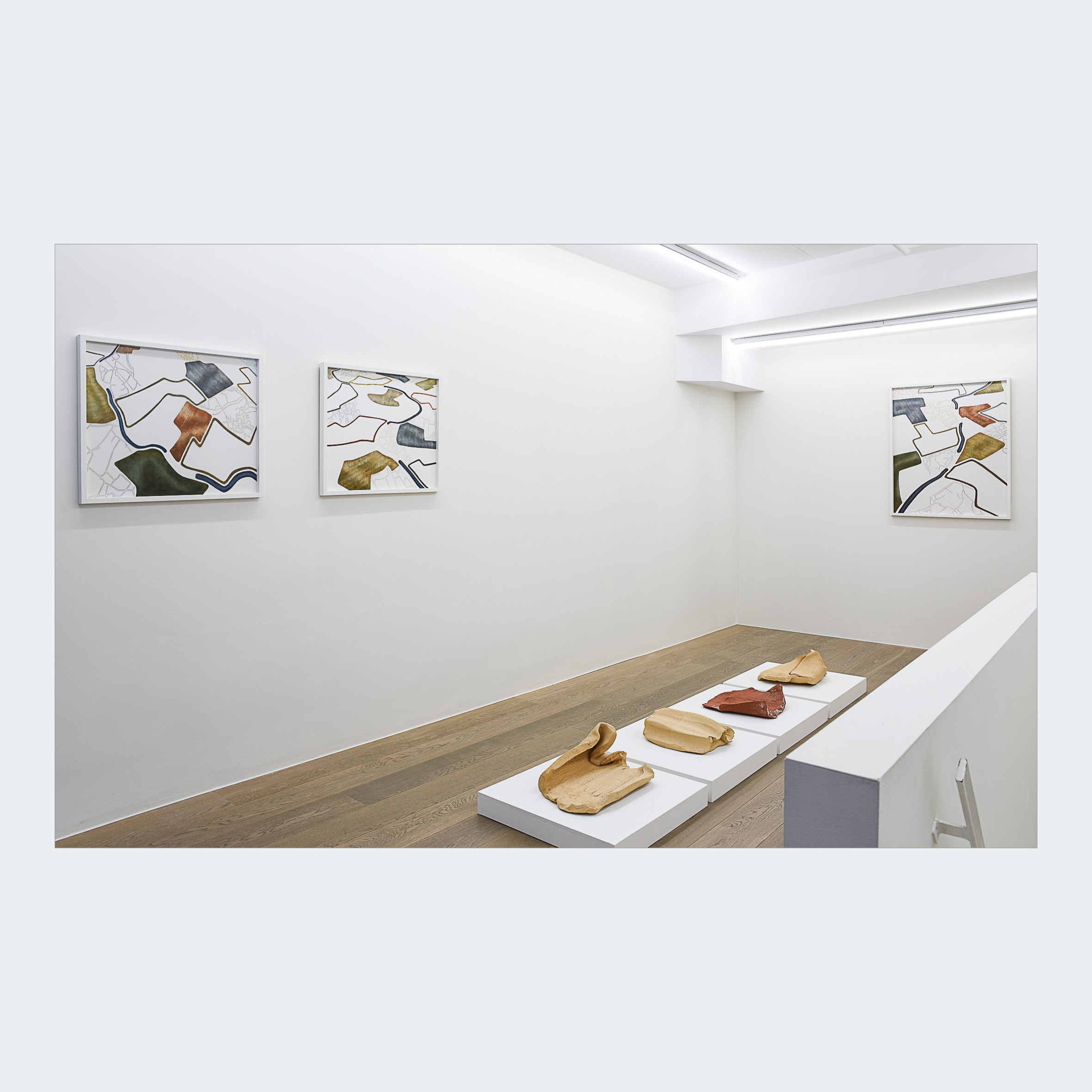
This exhibition explores the artistic interpretations of earth and territory by two artists whose practices could not be more different: Joost Colpaert and Skender Hyseni.
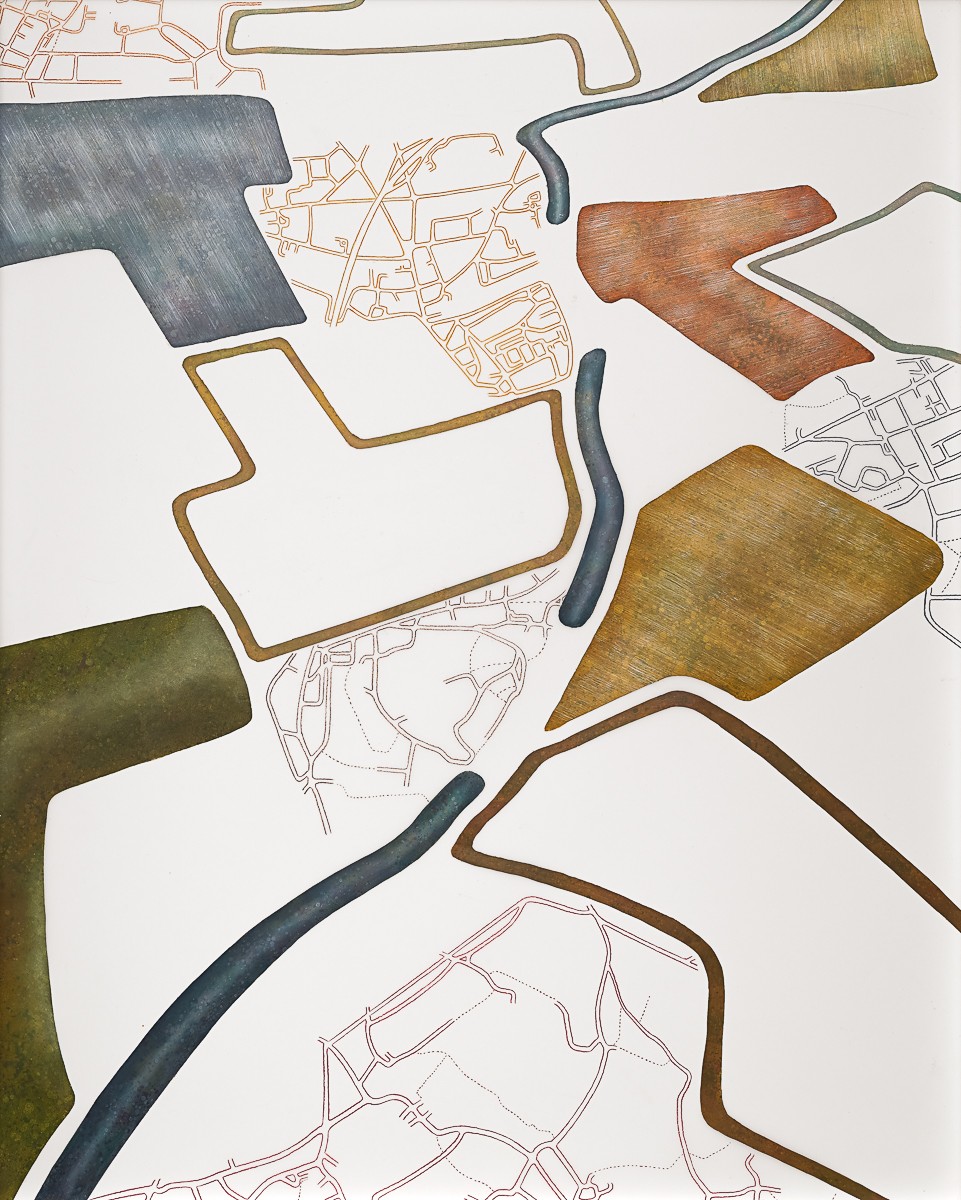
Joost Colpaert seems to feel the need to depict his native landscape of Flanders in the form of maps, as if to create an order, a well-organised presentation of fields, watercourses or street plans, whilst always leaving enough space for a smooth flow between the fields of various colours. In his smaller works, one gets the impression of looking at isolated areas, extracted from these maps for a more detailed study of their characteristics. The depiction of places thus involves an examination of the shapes and colours assigned to surfaces; the palette remains within earthy tones, with variations of brown or green for the land, and blue for the bodies of water. Does the artist believe, like Michel Houellebecq, that “the map is more interesting than the territory”(1)? In any case, here it is composition and colour that give the painting its rhythm.
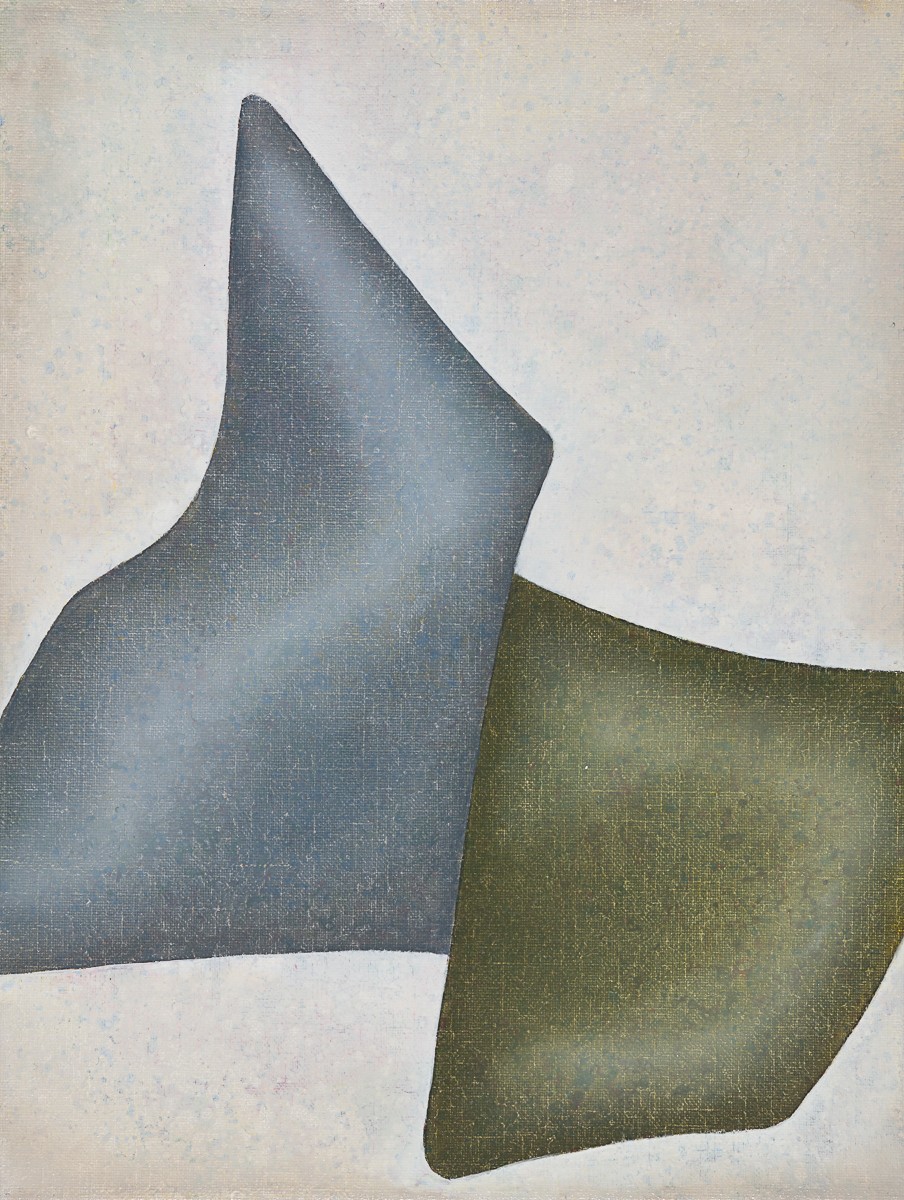
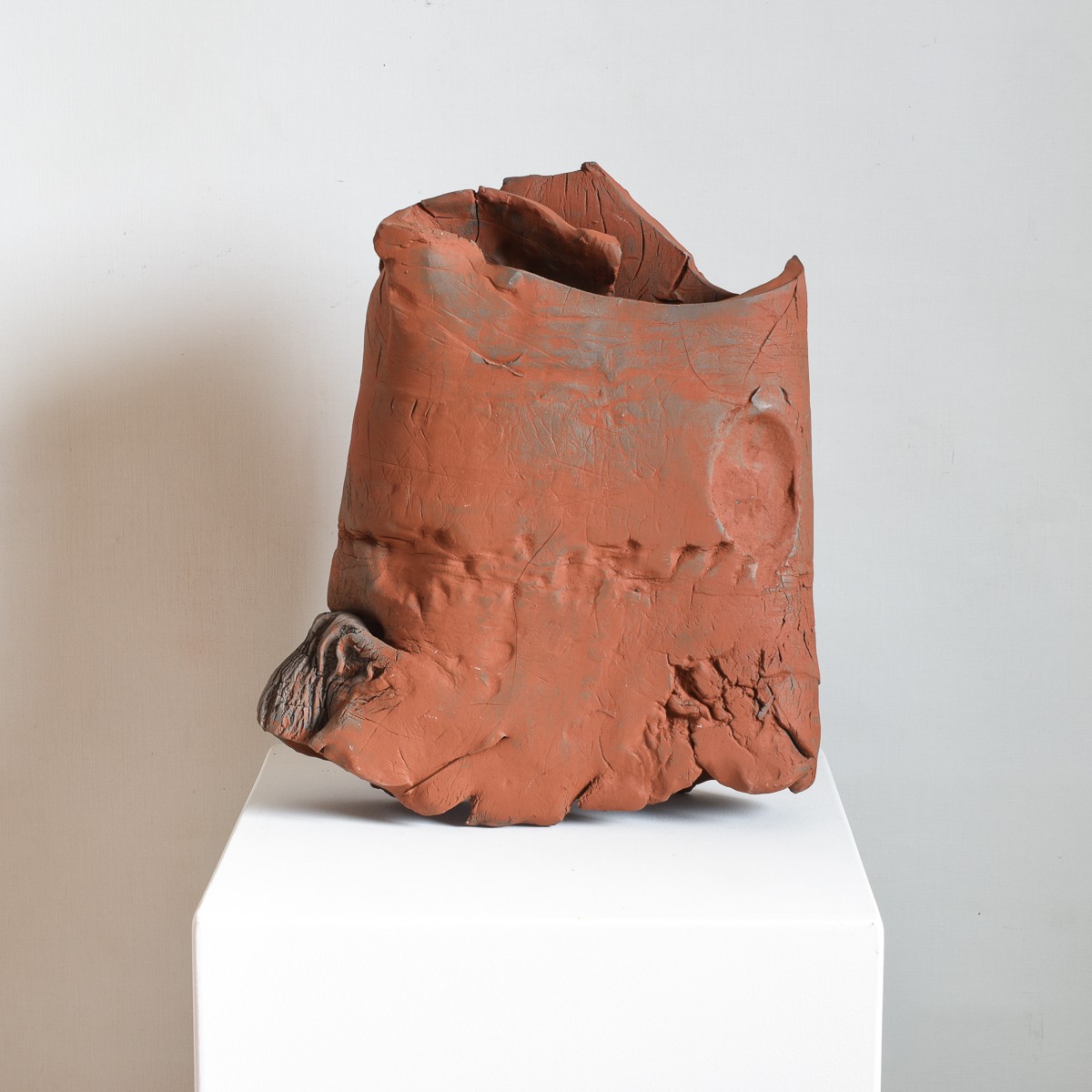
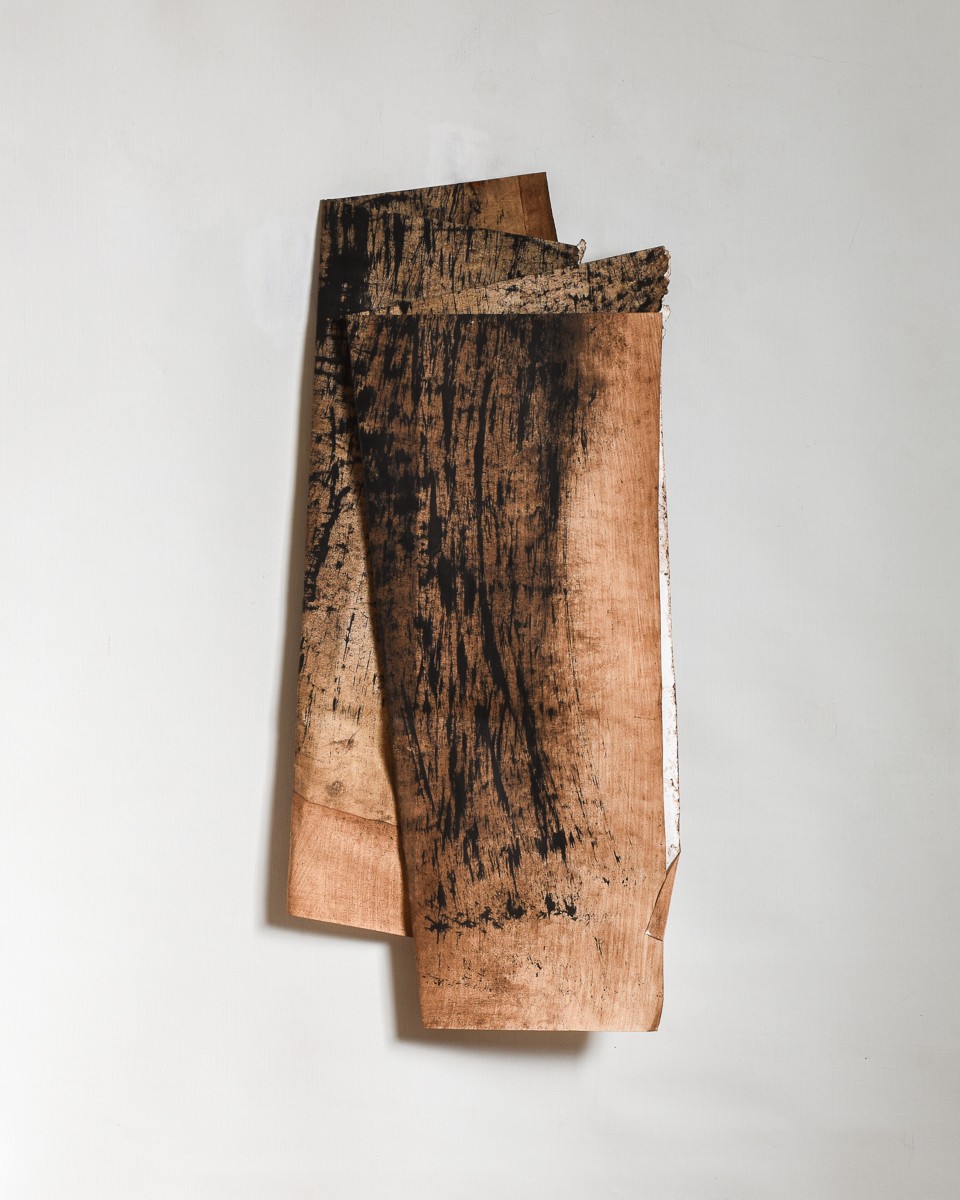
Skender Hyseni, for his part, takes his starting point from the material itself, which he regards as a means of bringing to the surface what remains of memories and emotions, as a connection to an inner memory that he seeks to make visible. The images are not rendered literally: they become shapes, volumes or surfaces, tensions or balances. Clay is one of the materials he has chosen to work with. The forms are at once abstract and rough, simple and primal, fragmented and unfinished, as if the material were resisting manipulation by the sculptor’s hand and the fire to which it is subsequently exposed. The result is a series of forms resembling fragments of landscape, or even archaic shapes.
Skender Hyseni’s monochrome sculptures and paintings, in earthy tones, thus offer us pieces of inner landscapes that complement Joost Colpaert’s map-paintings. As Olivier Rolin writes, “Maps offer not only space, but also stories: incomplete stories, to be imagined and written”(2).
(1) Michel Houellebecq, La carte et le territoire, 2010
(2) Olivier Rolin, La chambre des cartes, 2008
Joost Colpaert lives and works in Oudenaarde (Belgium). He is a graduate of the Royal Conservatory in Ghent. His works have been shown in numerous solo and group exhibitions in Belgium, the Netherlands and Germany. They can be found in several private and public collections, including the MUDEL Collection (Museum of Deinze and the Leie Region), SOFACQ Gallery, and the Collection of the Province of East Flanders. (https://joostcolpaert.be)
Skender Hyseni was born in Tirana (Albania). He studied at the School of Fine Arts in Shkodër (Albania) and at the Royal Academy of Fine Arts in Brussels. In 2002, he was awarded the first prize in the European Open-Air Sculpture Competition organised by Acte Sud and, in 2004, the Charles Buls Prize from the Royal Academy of Fine Arts in Brussels. His works have been shown in numerous solo and group exhibitions in Belgium and Germany. (https://www.skenderhyseni.com)
Uptown - Gallery
Thursday-Friday-Saturday, 14:00-18:00, and by appointment
Rivoli #21 - Chaussée de Waterloo 690, 1180 Bruxelles
Visit the website
Wheelchair accessible venue
Berlin Brussels Art Projects (BBAP) was founded more than a decade ago by German curator and art collector Marie-Therese Huppertz and Belgian photographer Eddie Bonesire, with the idea of giving a structure for their various art projects. While Eddie Bonesire has been concentrating mainly on his own work as a photographer and author (www.ebonesire.net), Marie-Therese Huppertz’ curatorial work has been focusing on the promotion of contemporary art through a variety of curatorial projects mostly in Berlin and in Ahrenshoop (Baltic Sea).
The BBAP gallery in the Rivoli building in Brussels is a continuation of that work. The gallery presents contemporary art in both solo and group exhibitions, across genres and techniques: painting, sculpture, photography or other forms of art.
Art knows no boundaries and indeed opens up new levels of perception. As the late Peter Weibel, former director of the Karlsruhe Centre for Art and Media (ZKM), put it: “The task of art is to open doors where no one sees them.”