RendezVous
Exhibition: Sudden Poetry
Sudden Poetry

Dieter Goltzsche

Start 11 Nov 2025
End 20 Dec 2025
External link

We are very pleased to once again present in Brussels recent works by Dieter Goltzsche, which he created over the past five years.

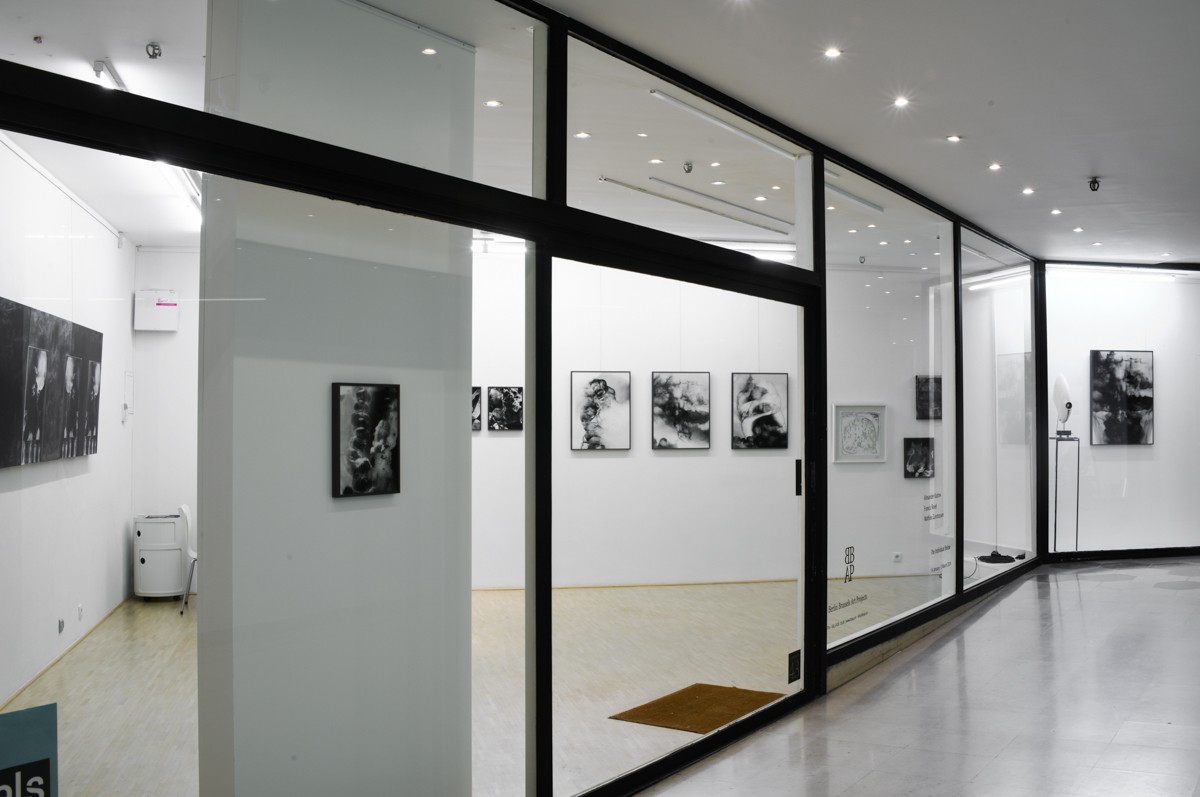
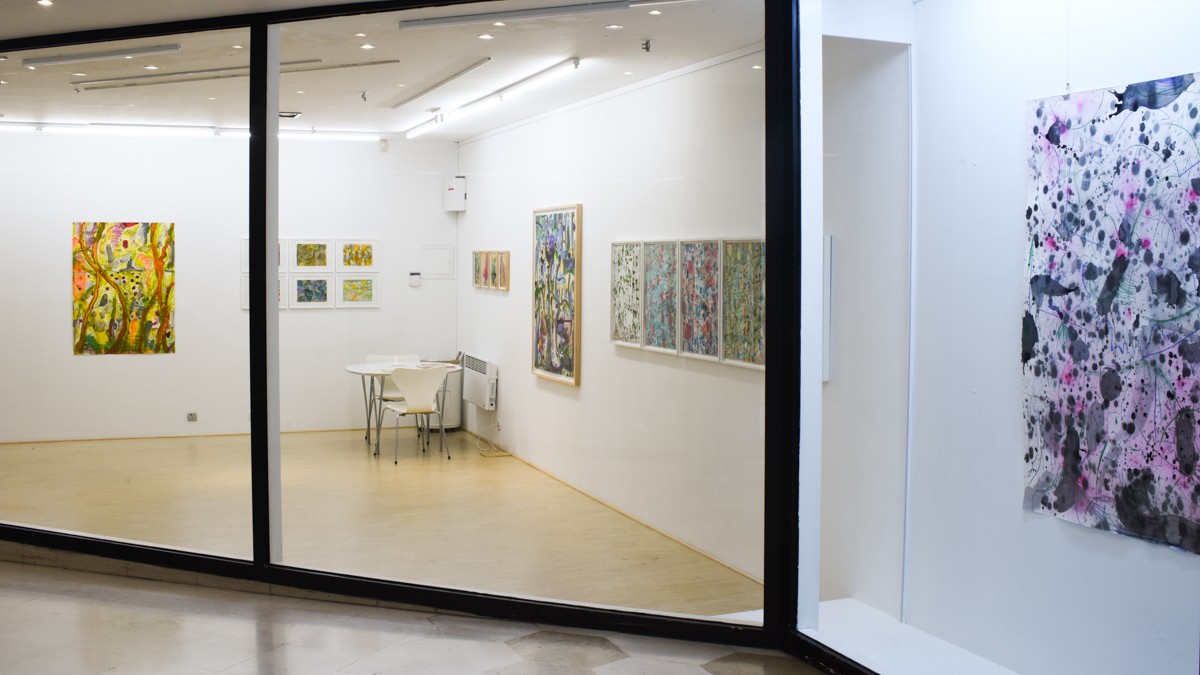
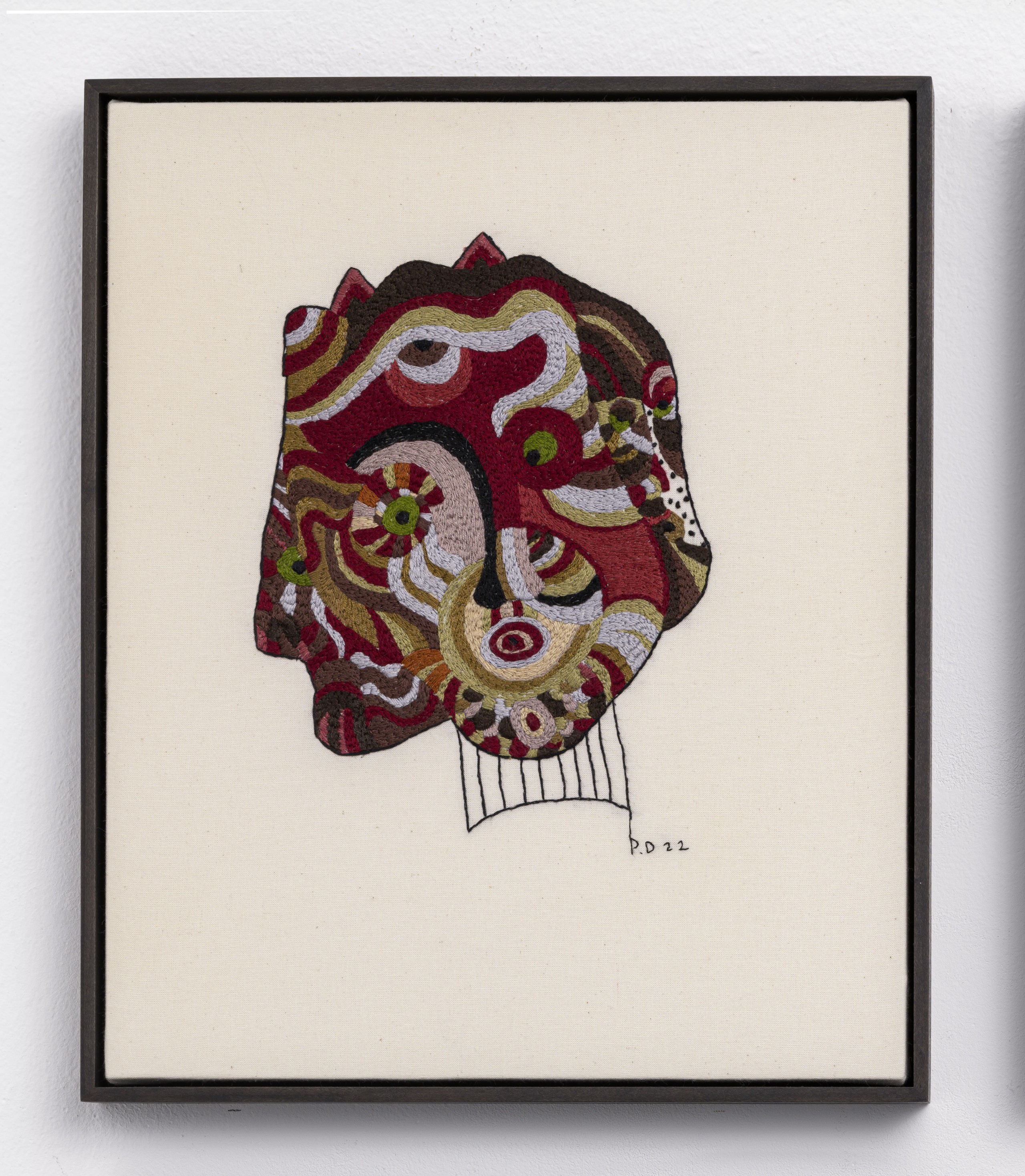
Broad black ink lines compete with other lines and shapes drawn in fine chalk or colour pencils. Carefully structured surfaces radiate great poetry. This also applies to the four painted clay plates created in 2010, which, in cheerful colors, display the artist’s typical lineations. The subjects of his pictorial creations are wideranging: we see and experience nature and culture on equal footing alongside profane depictions of time and space. Particularly noteworthy, however, is his engagement with what he has read and the visual responses to his readings.

In the book Schwarz (Black), Dieter Goltzsche quotes the writer Fernando Pessoa:

“Nothing that’s certain binds us to ourselves,

We are who we are and it is

Something inwardly perceived, the thing we were.”

About his work, he says:

“I draw to get to know myself. (…) But we take joy in the sunlight, in the rain, in the green leaf and the autumn leaf, and in the branches, which are like our veins or bones. Simply being is not easy. But that is what it is all about.”

Simply being! As a principle of life and creative work.

Goltzsche’s pictorial compositions are filled with an almost floating lightness, which expresses his joy in observing and translating what he sees into ever-new abstract variations of lines and figures on paper. This approach was already present in his early works, which bear no traces of socialist realism. On the contrary, his lineatures appear spontaneous, and his works are never a realistic picture, but rather seem to follow an inner compass or a profoundly poetic system in the invention of ever-new compositions. The use of geometric and abstract forms in the implementation of observations of any kind is always present throughout the entire work of the artist, almost like a game or, even better, an experiment of thought. The colour black always plays a central role, as we can also see in the works selected for this exhibition. Dieter Goltzsche says white and black want to be in balance. For the artist, it is not about the visual effect, but about the effect of black on white: according to the artist, only black has the power to make white shine.

Dieter Goltzsche was born in 1934 in Dresden. After completing an apprenticeship as a textile pattern designer and patterner, he studied at the Academy of Fine Arts in Dresden under Theo Richter and Max Schwimmer; in 1958/59 he was a ‘Meisterschüler’ of the latter at the German Academy of Arts. In 1980, Dieter Goltzsche started teaching at the Berlin-Weissensee Art Academy, where he held a professorship in painting and graphic arts from 1990. In 1978, he was awarded the Käthe Kollwitz Prize by the Academy of Arts; in 1990, he was appointed a member of the Academy. In 1998, Dieter Goltzsche received the Hannah Höch Prize from the State of Berlin and, in 2010, the Hans Theo Richter Prize from the Saxon Academy of Arts. His works are held in numerous museums and private collections both in Germany and abroad.

Exhibition: Forgotten Future
Forgotten Future

Holger Herschel

Start 11 Jan 2026
End 28 Feb 2026
External link

Berlin Brussels Art Projects, Rivoli Building #43, Chaussée de Waterloo 690, 1180 Bruxelles, https://bbap.art/, 11 January - 28 February 2026

Forgotten Future - Holger Herschel (DE, 1959), Une contribution au PhotoBrussels Festival 

FR Holger Herschel a commencé à photographier au moment de la Wende – le « point tournant » de 1989 - en République Démocratique Allemande (RDA). Ses séries documentaires des années 1990 témoignent des bouleversements du travail et de la vie en Allemagne de l’Est après la chute du mur. Pour l’exposition, deux ensembles emblématiques sont présentés : Schwarze Pumpe (1991), réalisé sur le plus grand complexe énergétique de la RDA, et Altes Eisen (1990–1993), consacré aux fonderies de Leipzig et Chemnitz. Entre paysages industriels noyés dans le brouillard, ateliers désertés et travailleurs saisis dans leur quotidien, Herschel capte l’atmosphère d’une époque charnière, entre vestiges d’un système socialiste et arrivée brutale de l’économie de marché.

Ces photographies fonctionnent aujourd’hui comme des capsules temporelles. Elles rappellent que toute transition majeure - hier la réunification, aujourd’hui la révolution numérique et l’essor de l’IA - s’accompagne d’incertitudes, de pertes et d’adaptations forcées. Les images de Herschel mettent en lumière cette tension permanente entre disparition et renouveau, et soulignent la capacité mais aussi la nécessité des individus à prendre part à la transformation de leur monde.

NL Holger Herschel begon te fotograferen tijdens de Wende — het keerpunt van 1989 — in de Duitse Democratische Republiek (DDR). Zijn documentaire reeksen uit de jaren 1990 getuigen van de ingrijpende veranderingen in werk en dagelijks leven in Oost-Duitsland na de val van de Muur. Voor de tentoonstelling worden twee emblematische reeksen getoond: Schwarze Pumpe (1991), gemaakt op het grootste energiecomplex van de DDR, en Altes Eisen (1990–1993), gewijd aan de gieterijen van Leipzig en Chemnitz. Tussen in mist gehulde industriële landschappen, verlaten werkplaatsen en arbeiders in hun dagelijkse routine vangt Herschel de sfeer van een kantelende tijd — tussen de overblijfselen van een socialistisch systeem en de plotselinge komst van de markteconomie.

Deze foto’s functioneren vandaag als tijdscapsules. Ze herinneren ons eraan dat elke grote overgang — gisteren de hereniging, vandaag de digitale revolutie en de opkomst van AI — gepaard gaat met onzekerheid, verlies en gedwongen aanpassing. De beelden van Herschel brengen de voortdurende spanning tussen verdwijnen en vernieuwing aan het licht, en benadrukken zowel het vermogen als de noodzaak van individuen om deel te nemen aan de transformatie van hun wereld.  

EN Holger Herschel began photographing during the Wende — the turning point of 1989 — in the German Democratic Republic (GDR). His documentary series from the 1990s bear witness to the upheavals in work and everyday life in East Germany after the fall of the Wall. For the exhibition, two emblematic series are presented: Schwarze Pumpe (1991), shot at the largest energy complex of the GDR, and Altes Eisen (1990–1993), devoted to the foundries of Leipzig and Chemnitz. Between fog-drenched industrial landscapes, deserted workshops, and workers captured in their daily routines, Herschel conveys the atmosphere of a pivotal era — between the remnants of a socialist system and the abrupt arrival of the market economy.

These photographs now function as time capsules. They remind us that every major transition — yesterday the reunification, today the digital revolution and the rise of AI — comes with uncertainty, loss, and forced adaptation. Herschel’s images illuminate the ongoing tension between disappearance and renewal, emphasizing both the ability and the necessity for individuals to take part in the transformation of their world.

 DE Holger Herschel begann zum Zeitpunkt der Wende – dem „Wendepunkt“ von 1989 – in der Deutschen Demokratischen Republik (DDR) zu fotografieren. Seine Dokumentationsserien aus den 1990er Jahren zeugen von den Umwälzungen in der Arbeitswelt und im Leben Ostdeutschlands nach dem Fall der Mauer. Für die Ausstellung werden zwei symbolträchtige Serien präsentiert: Schwarze Pumpe (1991), entstanden im größten Energiekomplex der DDR, und Altes Eisen (1990–1993), gewidmet den Gießereien in Leipzig und Chemnitz. Zwischen nebelverhangenen Industrielandschaften, verlassenen Werkstätten und Arbeitern in ihrem Alltag fängt Herschel die Atmosphäre einer Zeit des Umbruchs ein, zwischen den Überresten eines sozialistischen Systems und dem brutalen Einzug der Marktwirtschaft.

Diese Fotografien wirken heute wie Zeitkapseln. Sie erinnern daran, dass jeder große Wandel – gestern die Wiedervereinigung, heute die digitale Revolution und der Aufstieg der KI – mit Unsicherheiten, Verlusten und erzwungenen Anpassungen einhergeht. Herschels Bilder beleuchten diese permanente Spannung zwischen Verschwinden und Erneuerung und unterstreichen die Fähigkeit, aber auch die Notwendigkeit des Einzelnen, sich an der Transformation seiner Welt zu beteiligen. 

Opening “Forgotten Future - Holger Herschel”, Berlin Brussels Art Project, Jan 11, 2026

Special Opening on Sunday 25/01 & 08/02: 2-6pm

Book Presentation and signing in the presence of the photographes on Jan 24, 2026, 16 h

About the venue
Berlin Brussels Art Projects

Uptown - Gallery
Thursday - Saturday, 14 - 19 h and by appointment
Chaussée de Waterloo 690, 1180 Bruxelles
Visit the website

Berlin Brussels Art Projects (BBAP) was founded more than a decade ago by German curator and art collector Marie-Therese Huppertz and Belgian photographer Eddie Bonesire, with the idea of giving a structure for their various art projects. While Eddie Bonesire has been concentrating mainly on his own work as a photographer and author (www.ebonesire.net), Marie-Therese Huppertz’ curatorial work has been focusing on the promotion of contemporary art through a variety of curatorial projects mostly in Berlin and in Ahrenshoop (Baltic Sea).

The BBAP gallery in the Rivoli building in Brussels is a continuation of that work. The gallery presents contemporary art in both solo and group exhibitions, across genres and techniques: painting, sculpture, photography or other forms of art.

Art knows no boundaries and indeed opens up new levels of perception. As the late Peter Weibel, former director of the Karlsruhe Centre for Art and Media (ZKM), put it: “The task of art is to open doors where no one sees them.”