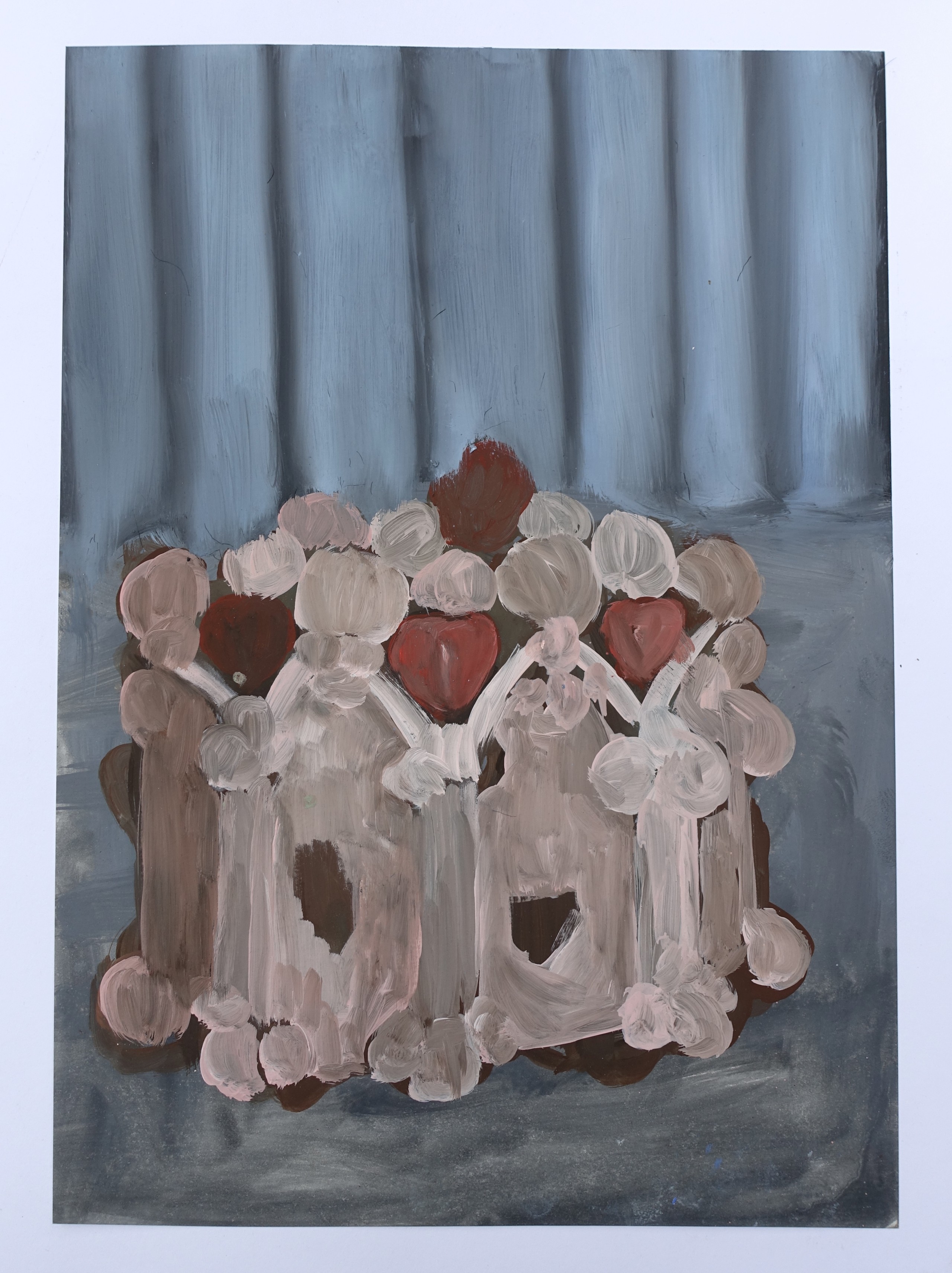
Annea Lyvv Dreisz
Alle Dagen Cake
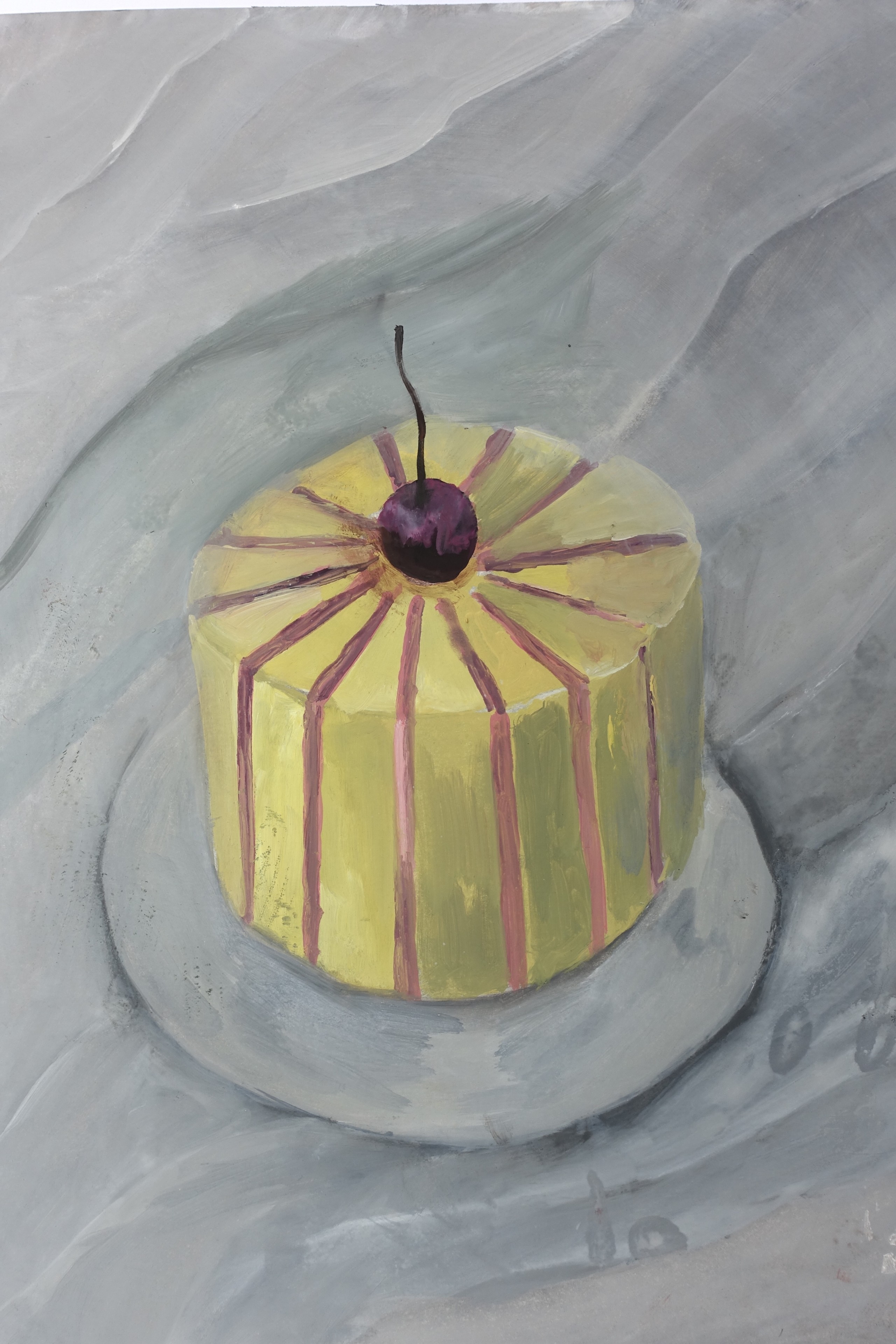
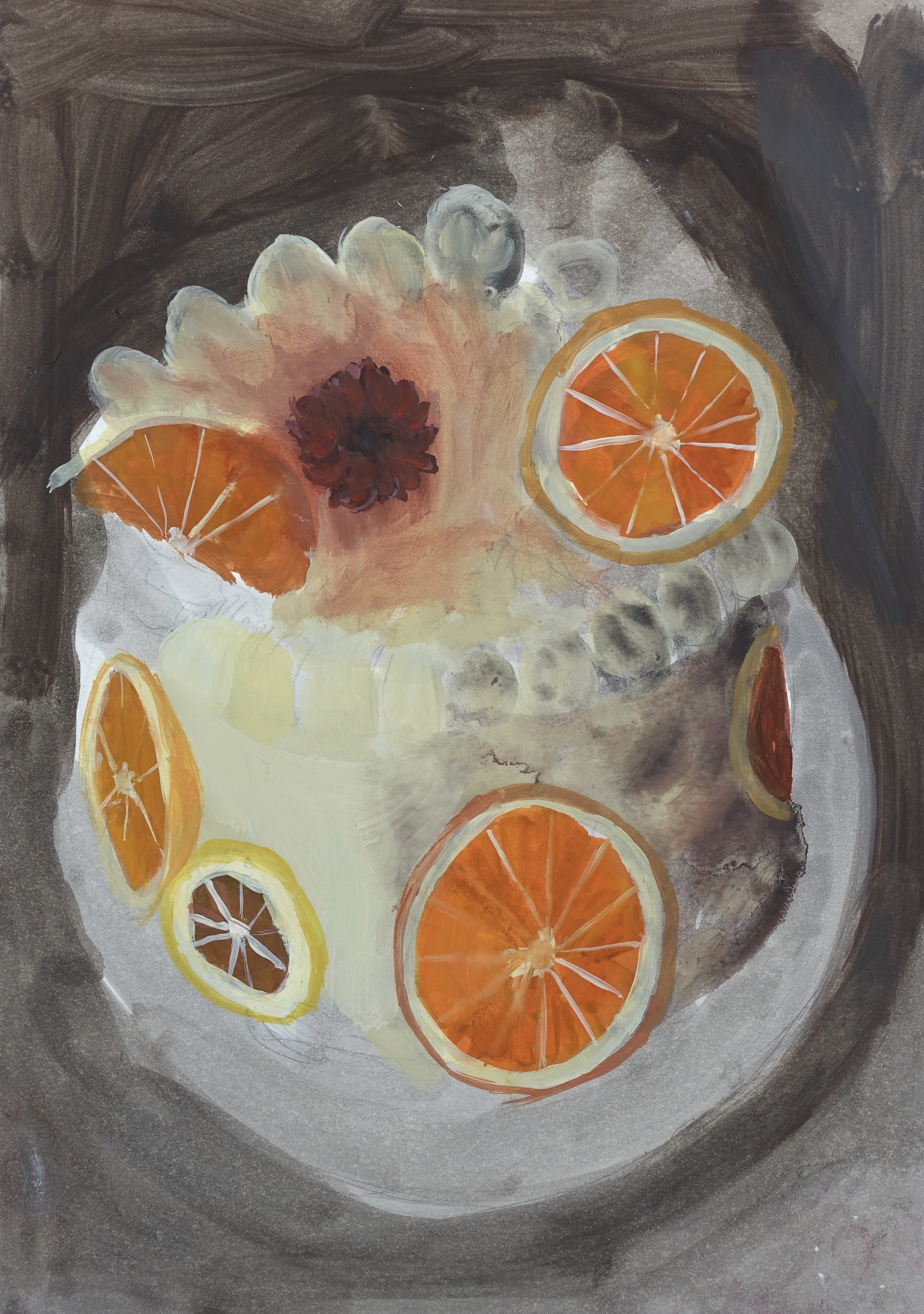
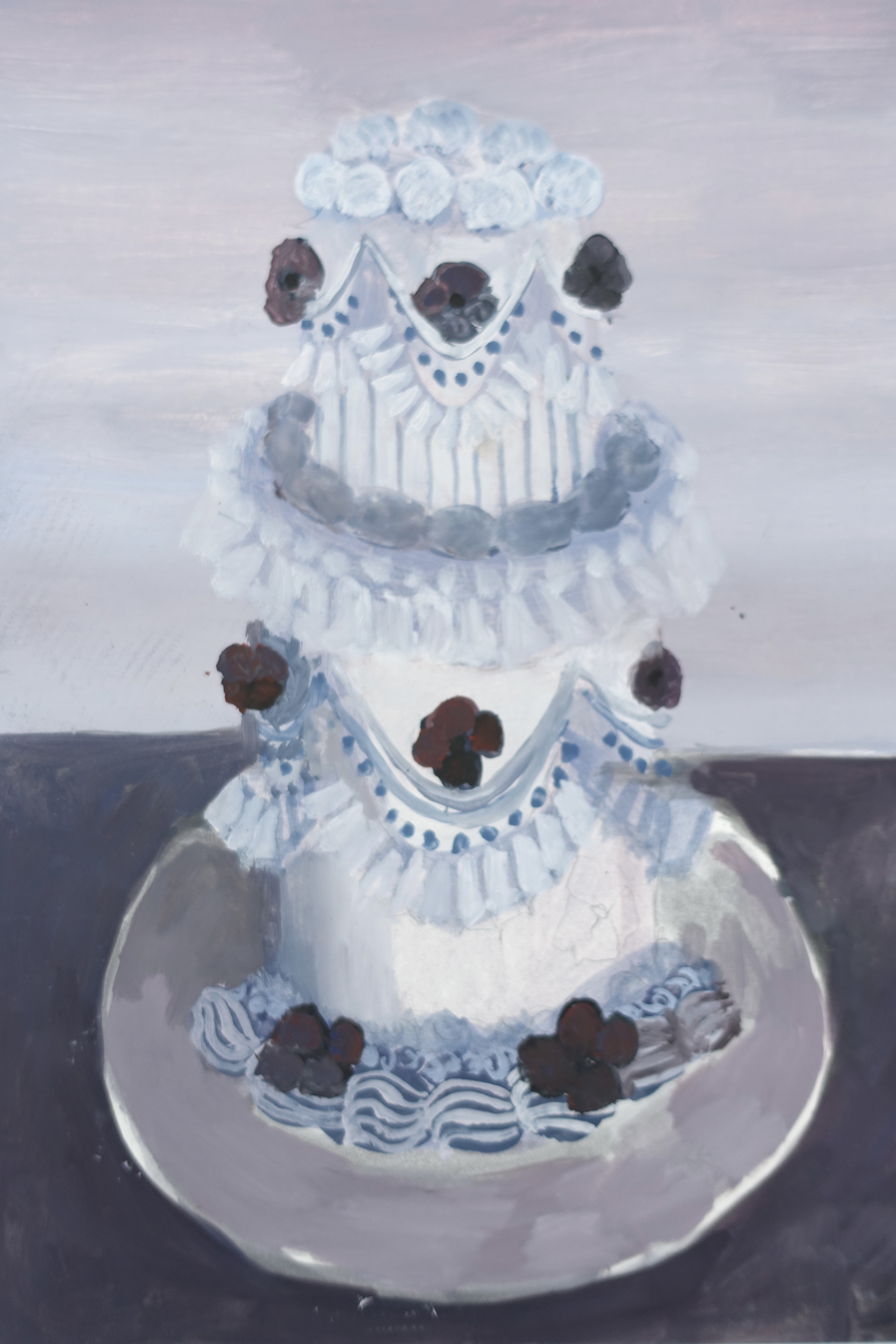
Blow the trumpets! Alle Dagen Cake, a series of paintings by Annea Lyvv Dreisz, emerged from the research she conducted for her Art’s Birthday cake Empire of Light at M HKA. In that work, the cake became a force of light against darkness—a critique of a society submerged in falsehoods, attempting to guide the public towards a state of eternal celebration, surrounded by angels and God.
During this process, Dreisz immersed herself in cakes of every imaginable kind, gradually building an extensive collection of references that she then began to paint. One cake a day. Like a meditation. A daily investigation. A daily celebration.
The title refers to Remco Campert’s book Alle Dagen Feest, drawing a parallel between baking cakes and painting them. Surrounded by the works of Magritte, Matisse, Gentileschi, Zurbarán and countless other painters, Dreisz transforms the cake into a painterly subject. From the textures of frosting to the vibrant colours of fresh fruit, each painting captures the essence of celebration. Through the medium of oil paint, the tension between light and darkness becomes tangible.
Every painting becomes part of the ever-expanding Empire of Light: an endless landscape of whipped-cream mountains, dazzling decorations and historical references hidden within the layered depths of the cake itself.
In the grandeur of eighteenth-century European painting, lavish cakes often symbolised wealth, status and abundance. Featured prominently in still-life compositions, they reflected both the skill of the baker and the cultural significance of food in rituals, festivities and communal gatherings. Dreisz draws upon this rich tradition, positioning the cake as a centrepiece for dialogue and a testament to the importance of the present moment.
When there is cake, you matter.
Each painting carries the title Centrepiece followed by the date on which it was made. Dreisz presents her cakes like a pâtissier displaying daily creations. Yet instead of being consumed, these cakes can be acquired, preserved and integrated into everyday life. The cake becomes a lasting presence.
In this way, cake turns into a form of currency, gently critiquing economic systems that prioritise profit over personal happiness, generosity and collective well-being. Throughout the process, Dreisz’s thoughts themselves become spongy, creamy, crusty and crunchy.
There must be hundreds of cakes.
Kingdom fights kingdom. Cake fights cop. Marie Antoinette strikes back.
Let’s go.
Frostings, meringues, buttercreams, fruits, ribbons and flowers. Bow your tie and tie your bow. One cake a day will suffice.
These cakes are symbols of celebration and liberation. They appear unexpectedly—even in the faces of the thieves who come to steal, to kill and to destroy.
Albert Pepermans
Known as the Homme de Poivre since the 1980s, Albert Pepermans remains as prolific as ever. Approaching his 80th birthday, he still works faster than his shadow. This late summer, CollectED welcomes the Belgian artist for a temporary exhibition at Place Brugmann, presenting a selection from his ongoing Journal Brut series. The exhibition runs from 10 September until 24 October.
Since 2013, Albert Pepermans has been developing Journal Brut, an ongoing visual diary built from photographs taken during his travels and everyday life. Fleeting observations and seemingly insignificant details are transformed into poetic images that exist between photography and painting.
Printed on plexiglass and mounted onto monochrome painted canvases, the photographs are stripped of their original context and charged with new meaning. Handwritten titles further blur the boundary between reality and imagination.
Raw yet carefully composed, Journal Brut reveals Pepermans’ unique ability to elevate the ordinary into a deeply personal and evocative visual language.
Uptown - Gallery
Thursday to Saturday from 1 to 6 pm
Chaussée de Waterloo 690, 21 - 1180 Brussels
Wheelchair accessible
Visit the website
Elie Schönfeld, a passionate collector and patron of the arts, founded Schönfeld Gallery in Antwerp in 2015. Today, the gallery operates from two locations: its Brussels space at Rivoli, a former 1970s shopping centre transformed into a vibrant contemporary art hub housing fifteen galleries, and its Antwerp venue, which serves as a platform for exhibitions, collaborations and experimental projects.
Schönfeld Gallery works with young and old, promising and renowned, national and international artists. With a penchant for the unconventional, the gallery presents bold work from various disciplines, while paying special attention to work on paper and the research into the artist as a draughtsman.
In order to support each artist sufficiently, the gallery purposely opts for long-term relationships and a small group of represented artists. Working intensively with her artists, Greet Umans, director and driving force of the gallery, seeks out suitable contexts for their work. Focusing on institutional activities and international exchange, she guides the artists through projects such as exhibitions and publications. Open communication is essential for this kind of partnership.
Transparency plays, likewise, a central role in Schönfeld Gallery’s communication with the audience. Through a programme of temporary, multidisciplinary projects initiated by the gallery’s artists, artist talks, performances, and an art bar, the gallery provides space for research and experimentation, while offering viewers the opportunity to closely follow the development and growth of the artists’ oeuvres.