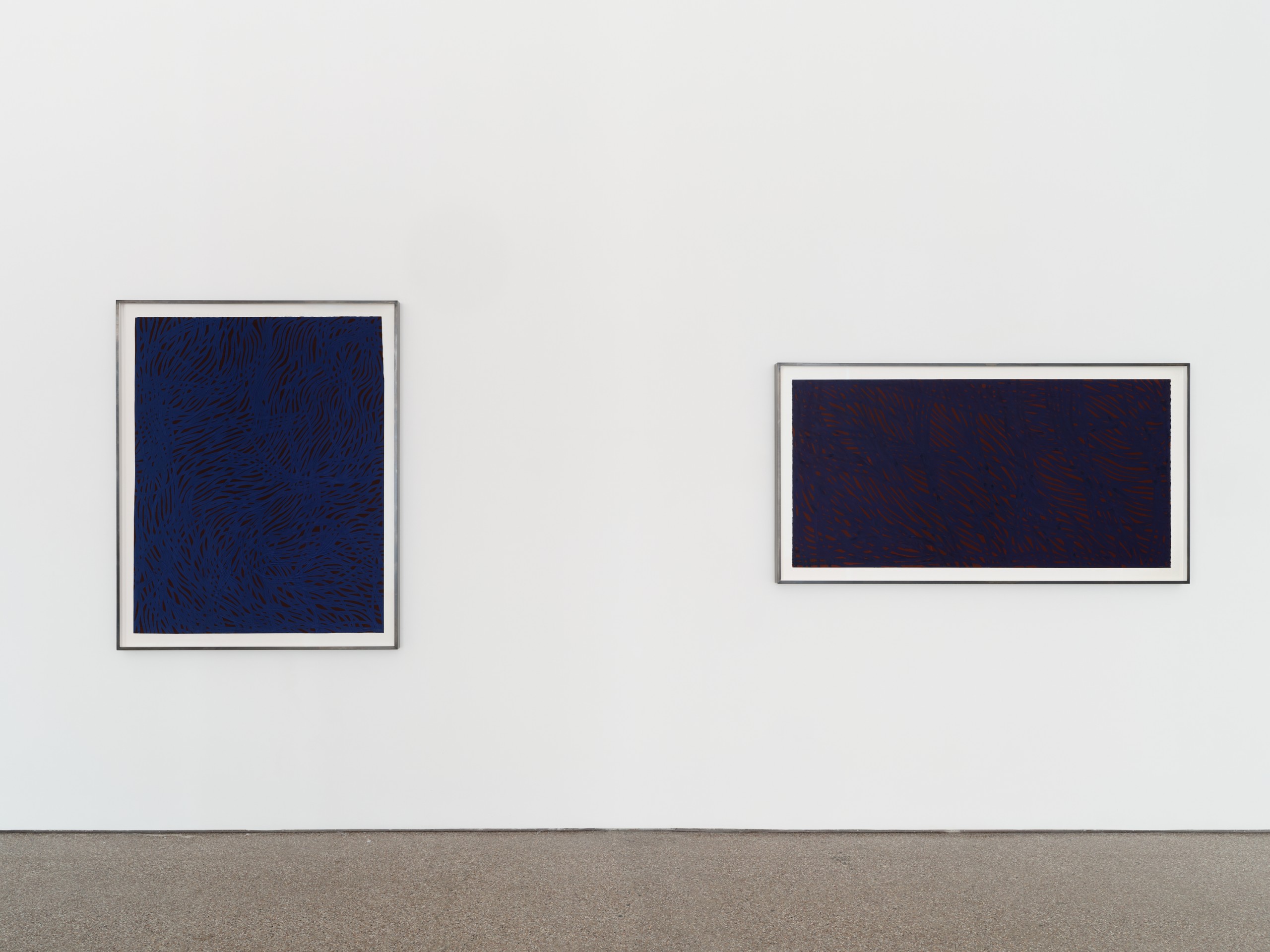
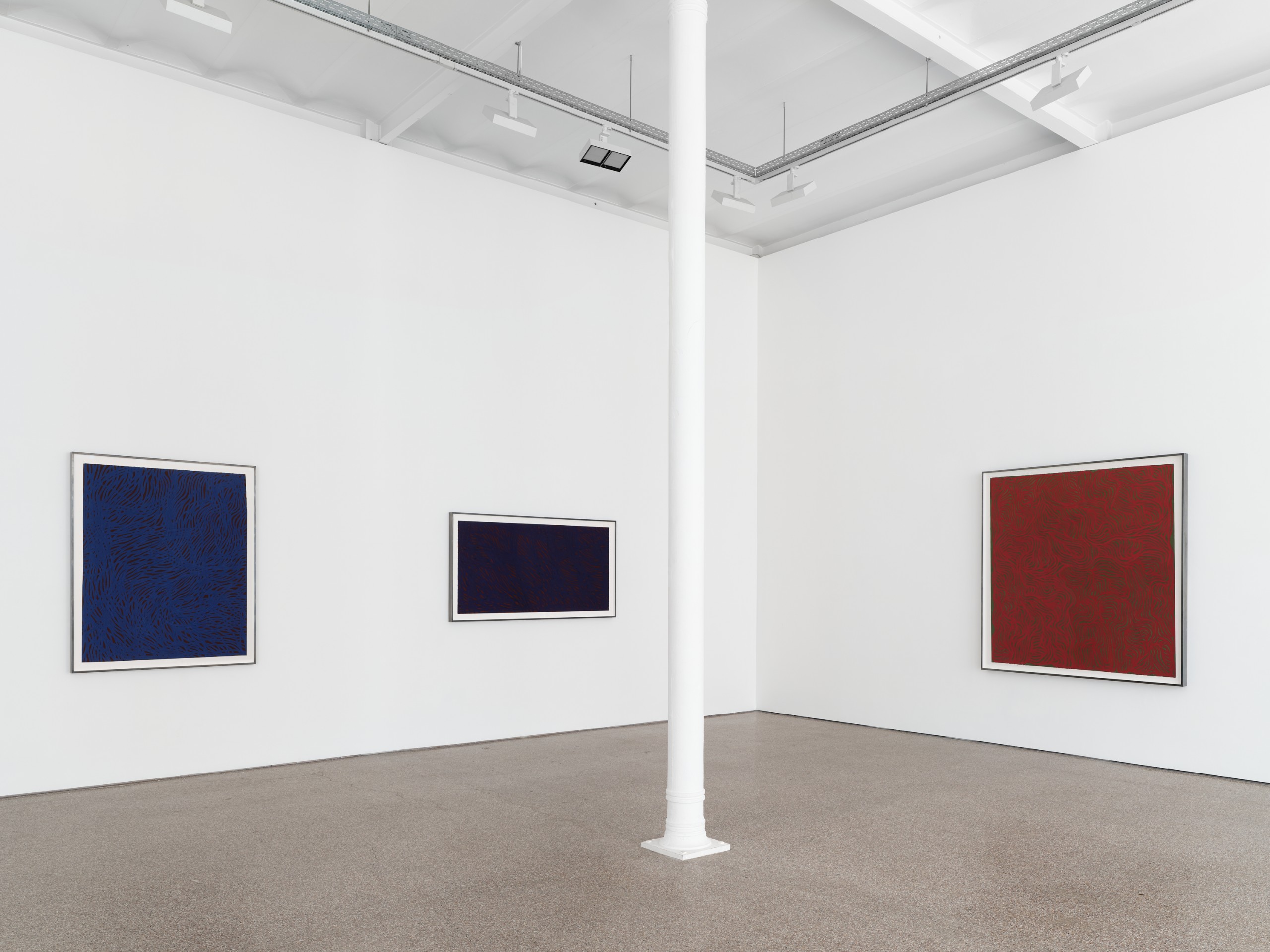
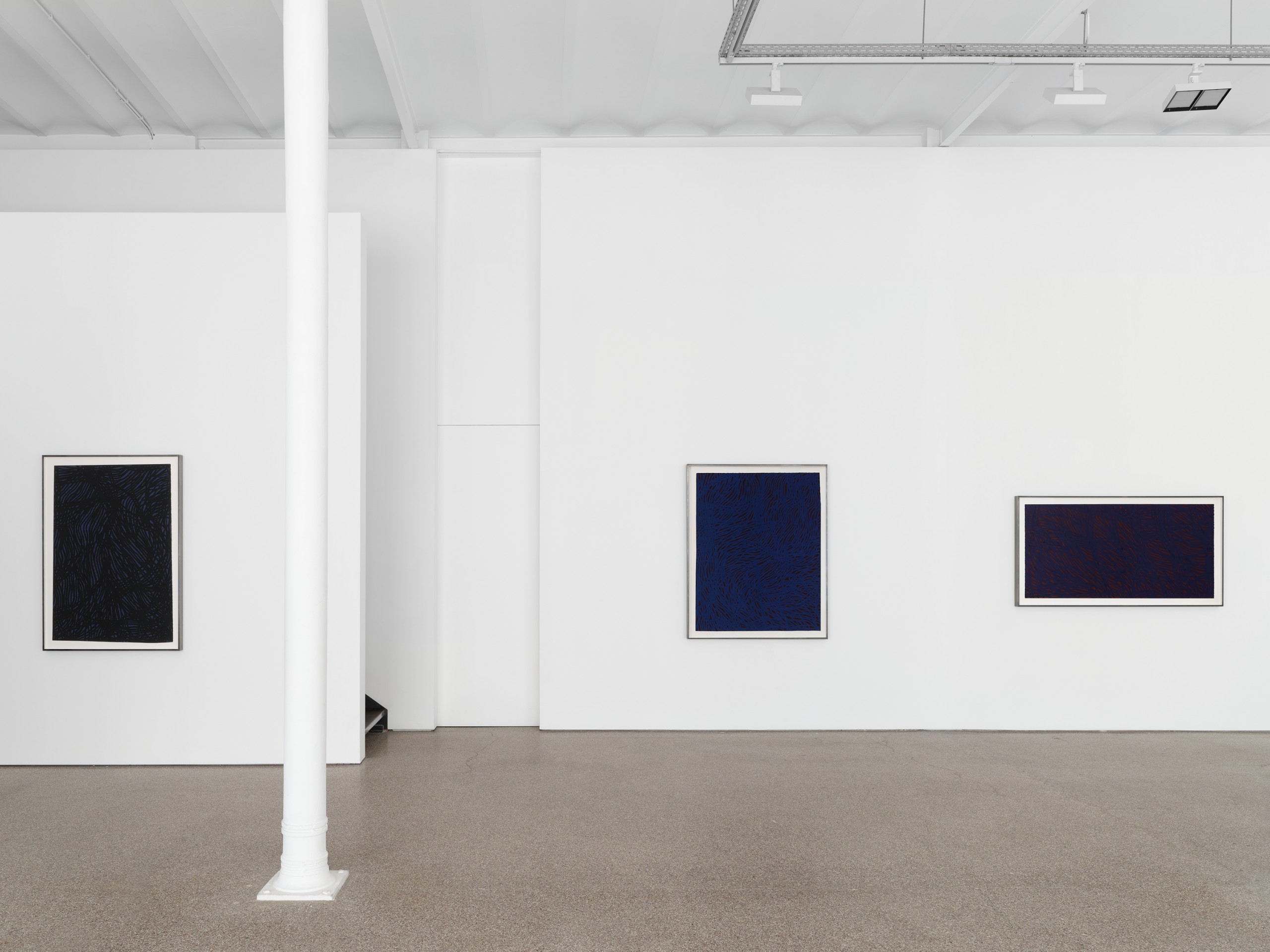
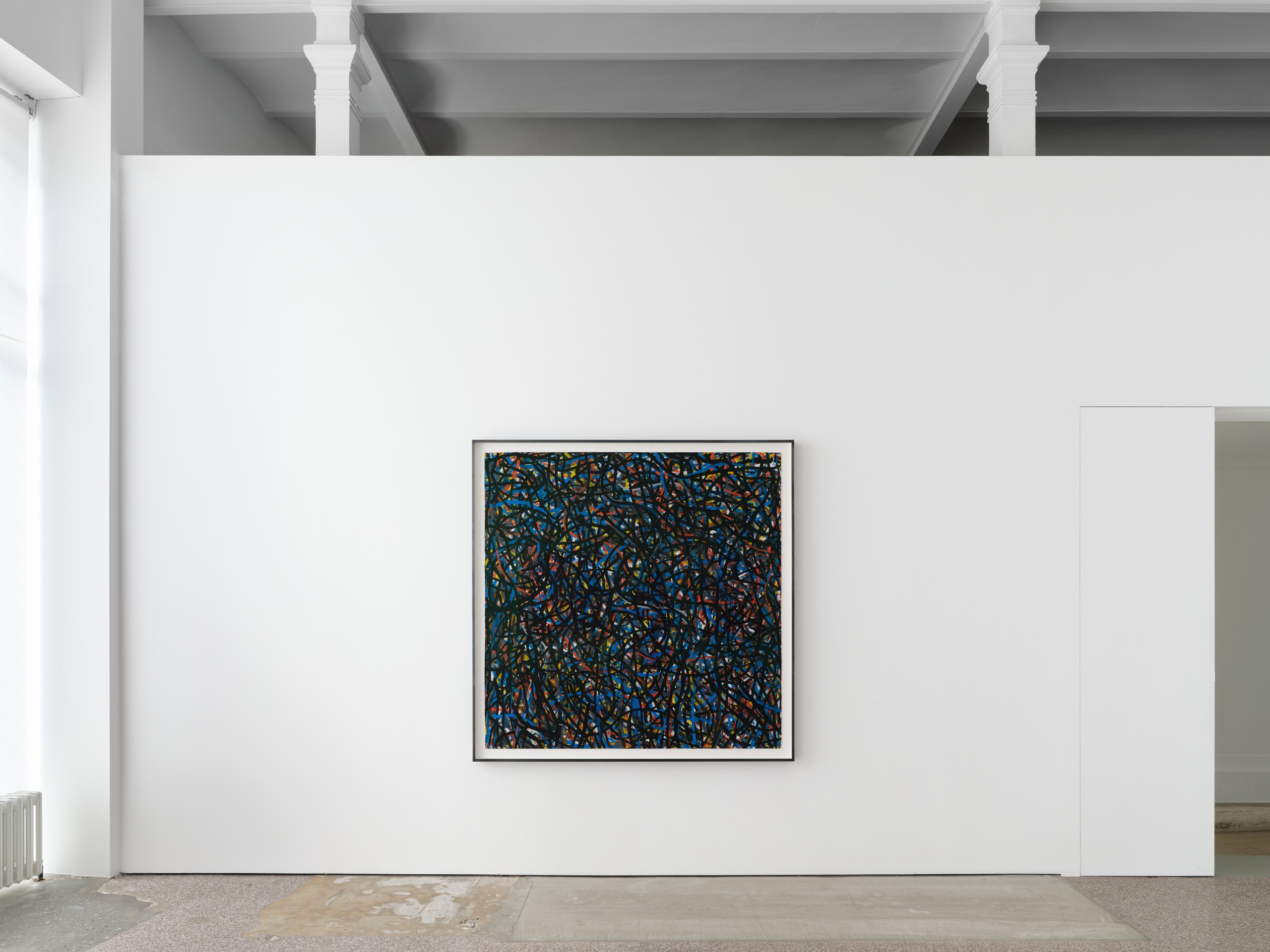
Sol LeWitt
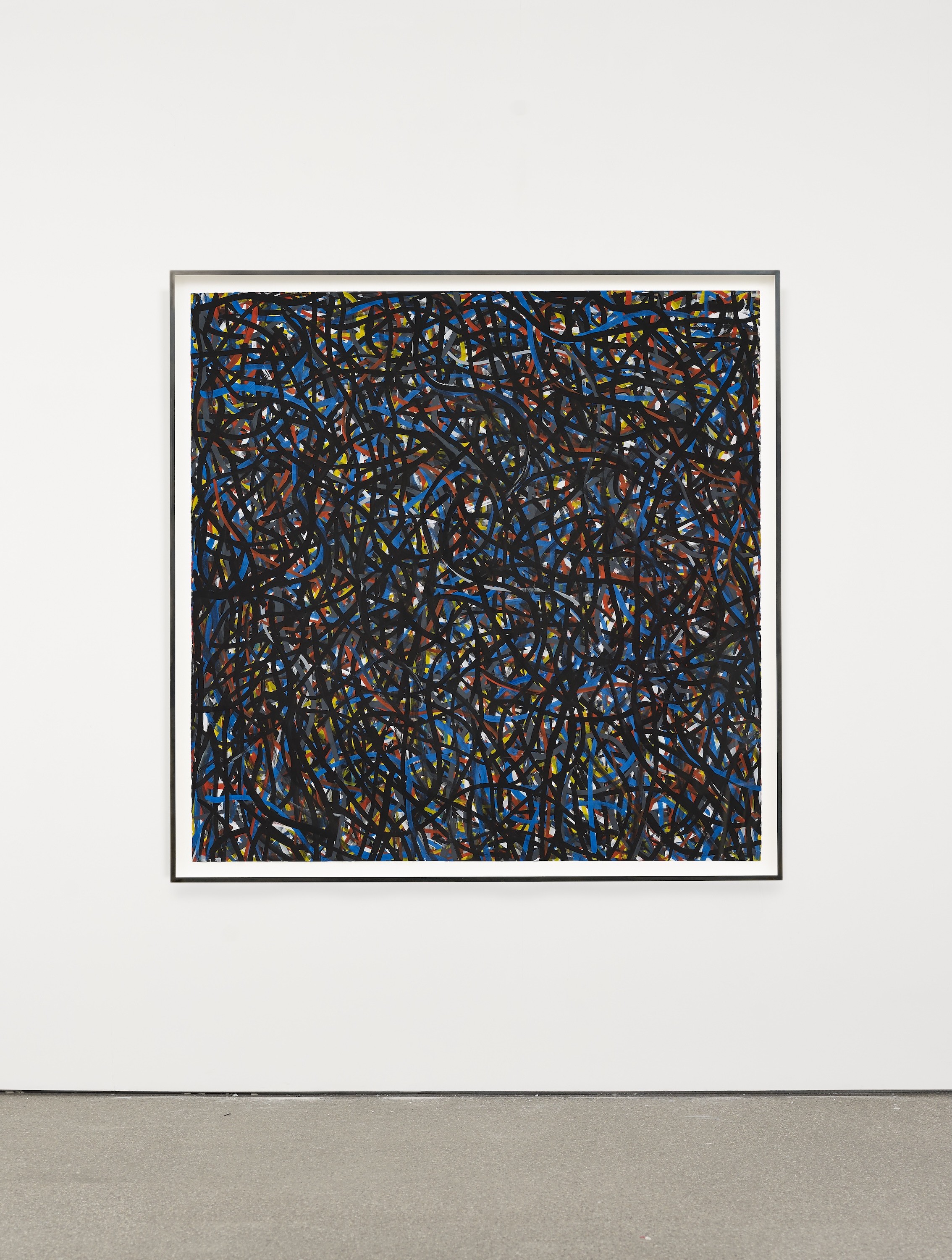
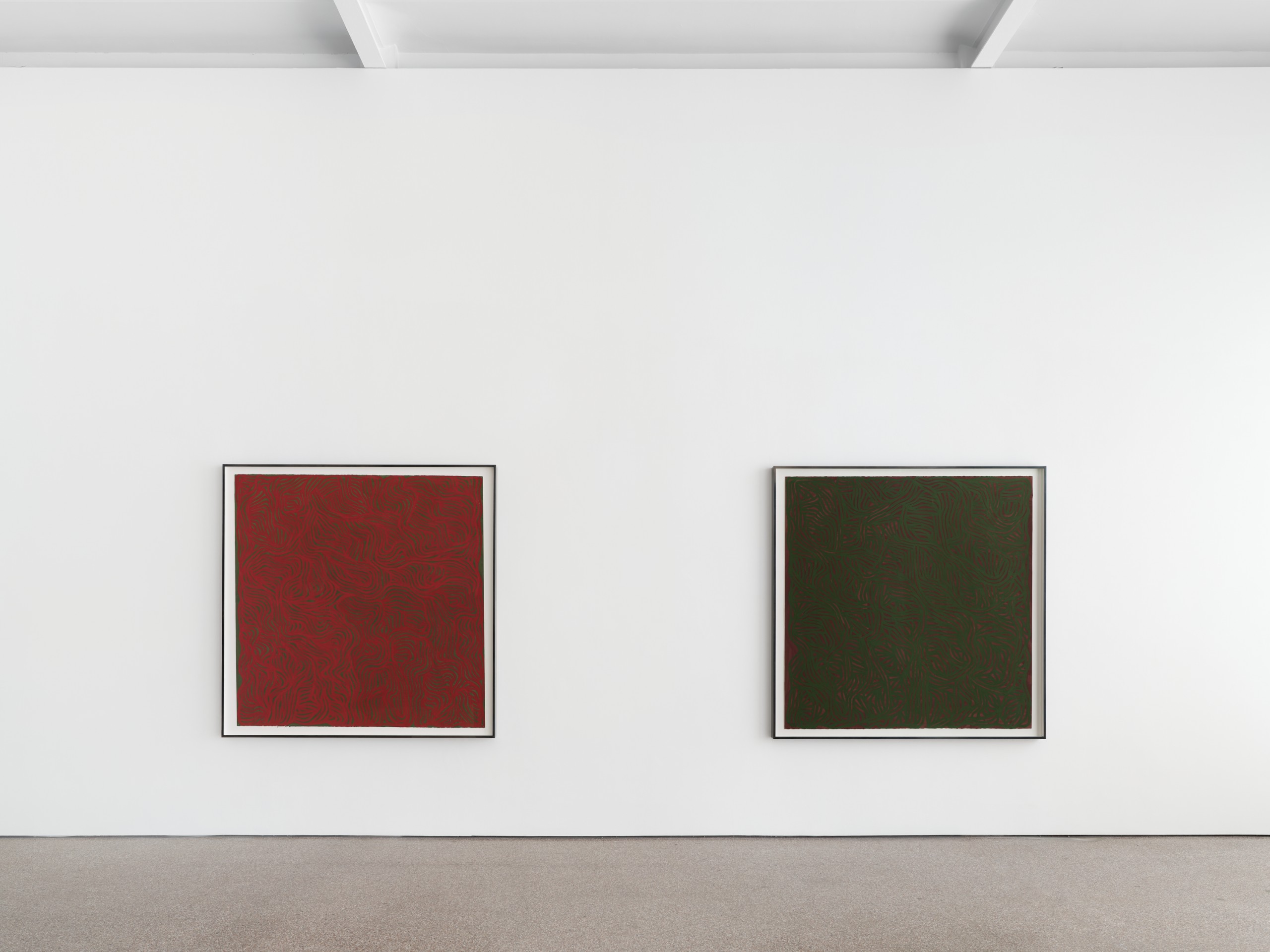
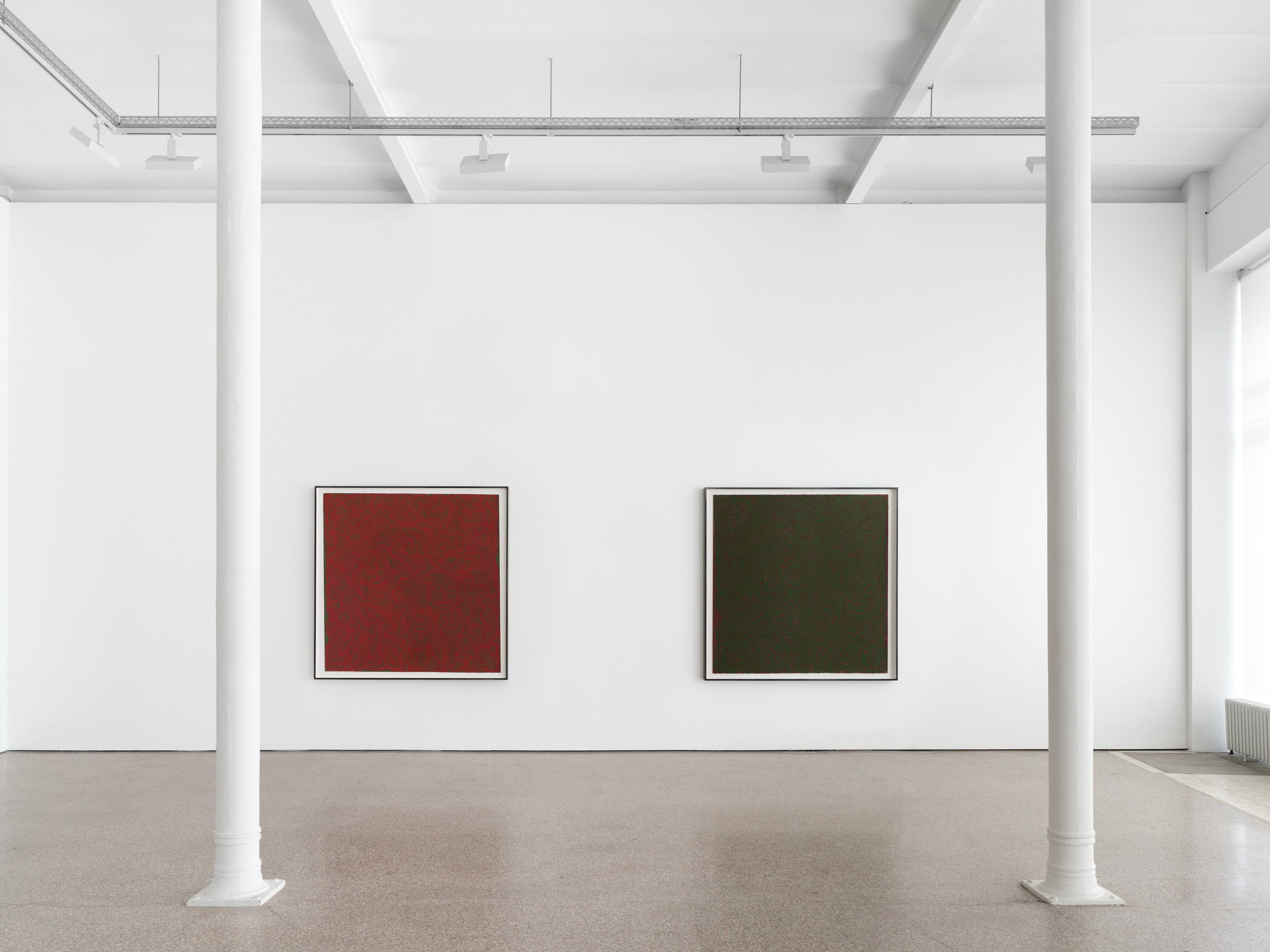
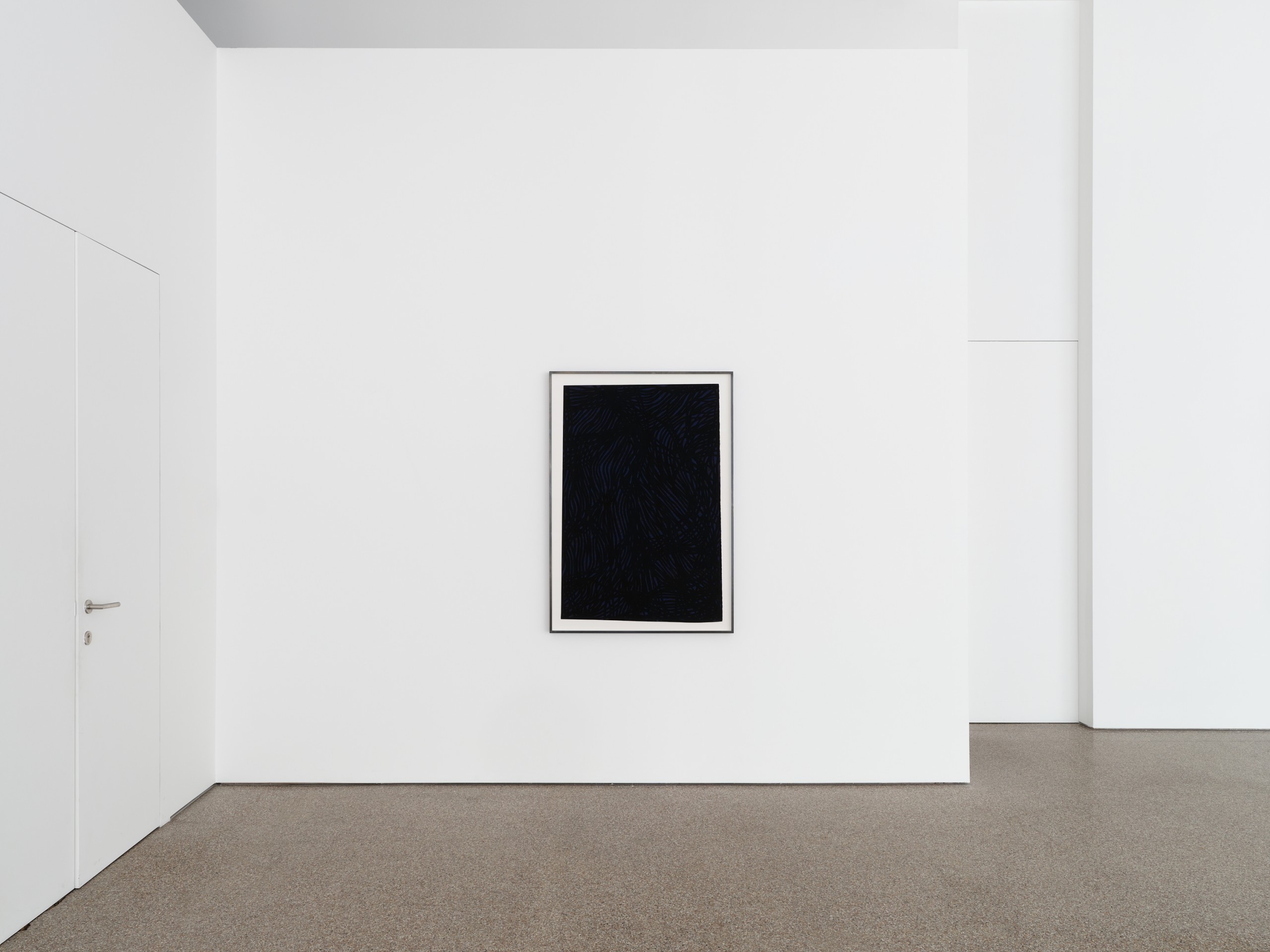
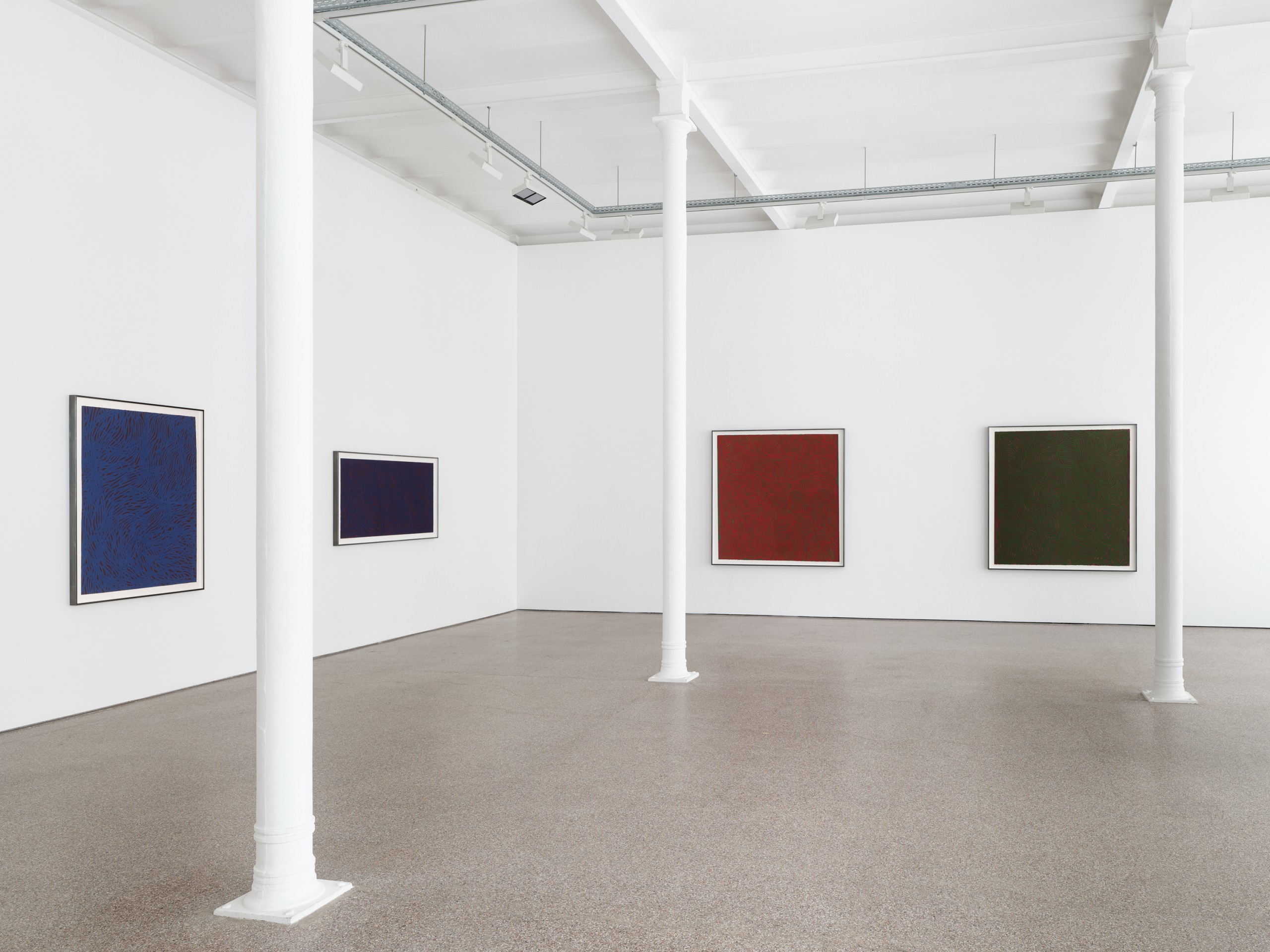
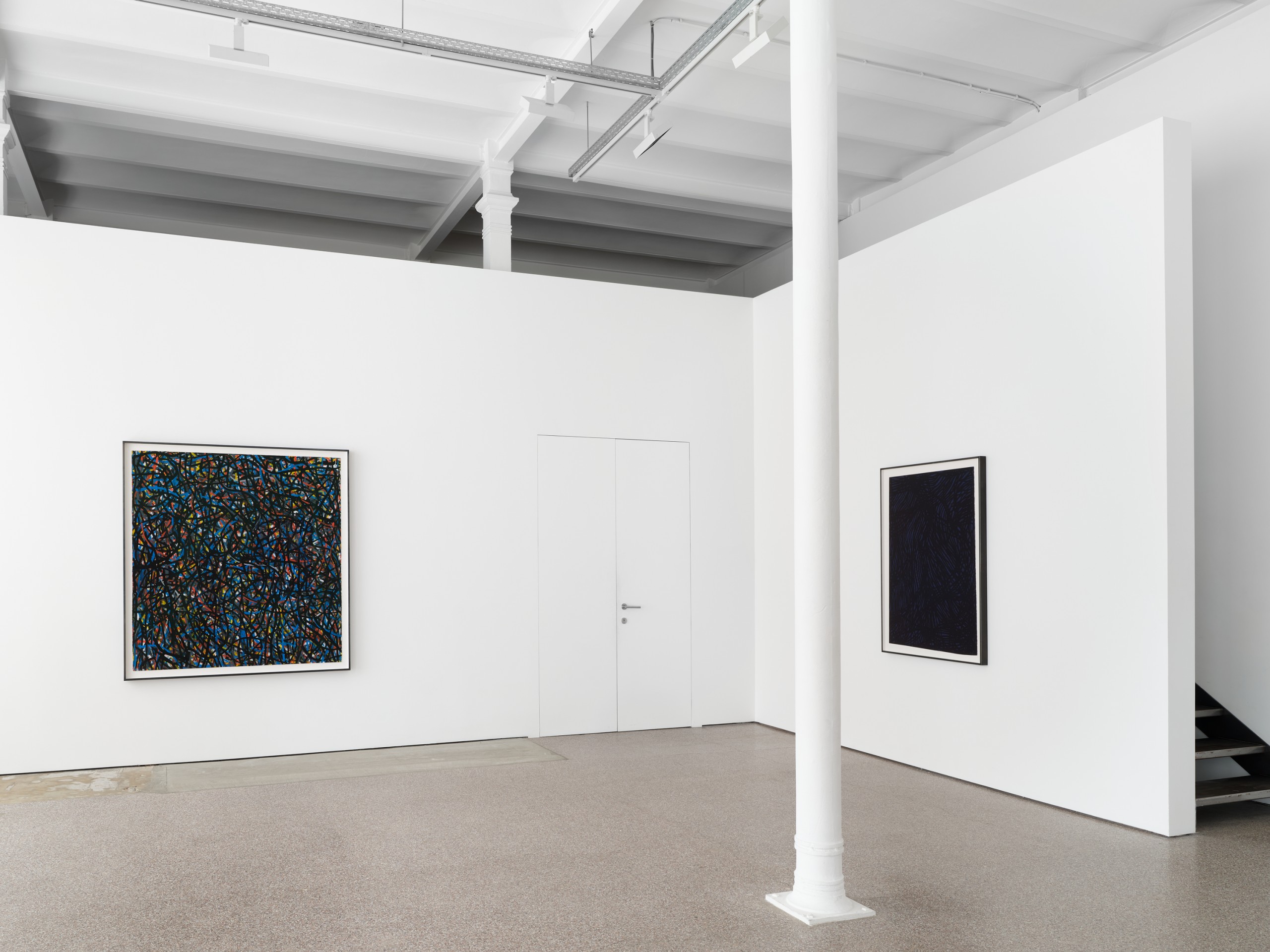
During the late 1990s and early 2000s, American artist Sol LeWitt, a central figure in Conceptual and Minimalist art, continued to explore the expressive potential of drawing through a series of vibrant, dynamic works on paper. These pieces, including Tangled Bands, Not Straight Brushstrokes, and Parallel / Irregular Curves, showcase LeWitt’s shift from rigid geometric structures to more organic, fluid forms. Using gouache, ink, and acrylic, LeWitt layered undulating lines, interwoven bands, and rhythmic curves, creating compositions that balanced spontaneity with his signature systematic approach. Unlike his earlier precise, rule-based wall drawings, these works embraced irregularity, gesture, and a playful interaction of color and form. Yet, even in their apparent freedom, they retained an underlying logic, reflecting LeWitt’s enduring fascination with the relationship between concept and execution. This period highlights LeWitt’s late-career experimentation, where the rigor of Minimalism gave way to a more lyrical, almost painterly sensibility, proving that even within self-imposed constraints, endless variation was possible.
Artist Talk with Liam Everett
Erica Mahinay
Galerie Greta Meert is pleased to present Evaporation Ceremony, its first solo exhibition of Los Angeles-based artist Erica Mahinay. The title itself operates as both threshold and tone: an evaporation ceremony suggests not loss, but transformation. Matter released from one state onto another, the visible dissolving into something still present, still felt, though no longer fully legible. It is a title that asks us to attend to what remains after the gesture, after the making, after the heat of contact between hand and surface has passed.
The exhibition rests on two distinct yet inseparable pillars. The first comprises a substantial new body of paintings in which Mahinay continues to develop her rigorously intuitive practice. These canvases resist easy categorisation. They are abstract, yet they bear the unmistakable pressure of a body at work. Paint is applied in a variety of ways, but most strikingly by hand, literally: the artist’s fingers become instruments of both structure and sensation, leaving traces that are at once gestural and deliberate. There is something almost symphonic in the accumulation of these marks, a lyrical drawing-out of form that unfolds across the surface with the logic of a score rather than a plan.
And yet these works are not lawless. Beneath their apparent freedom lies a grid-like sensibility, a latent architecture that organises without constraining, that gives the eye somewhere to move without telling it where to go. One senses that the grid is never imposed but rather discovered, as though it were already sleeping inside the canvas, waiting to be woken by colour and pressure. Colours, here, are never incidental. Each canvas asserts a chromatic identity that feels both chosen and inevitable, contributing to a body of work marked by striking diversity and, simultaneously, by a deeply coherent visual voice, one that is instantly recognisable across even the widest variation of surface or palette.
The second pillar emerged from Mahinay’s residency at Cerámica Suro in Guadalajara, Mexico, in 2025. The ceramic installations produced there occupies an entirely different register, though the resonances with the paintings are immediate and intuited. Fingerprints recur, and the directness of touch remains central but where the canvases lean fully into abstraction, the ceramic works flirt openly with the figurative. Human forms surface and recede. Shapes carry the weight of archacological memory, as though unearthed rather than made, bearing the marks of time and ritual alongside those of the artist’s own hands. Clay, unlike canvas, holds everything: pressure, hesitation, revision. In Mahinay’s hands it becomes a material of quiet testimony, registering the body’s presence with an intimacy that feels at once ancient and entirely contemporary.
The exhibition’s title, Evaporation Ceremony, encapsulates this dialogue. It suggests a rite of transformation, where the liquid immediacy of paint and the solidity of clay meet, and where the figurative solid can dissipate into the abstract ether. It speaks to a process of becoming, where a symphony of colour and gesture is both laid bare and obscured, like a memory or a landscape fading In the neal, or conversely, condensing from vapour into form
Following her presentation in Brussels, Mahinay will continue her inquiry this summer at the Headlands Center for the Arts in California. There, against the threshold of ocean and sky, the work will encounter new conditions for evaporation.
Artist Talk with Liam Everett
Liam Everett
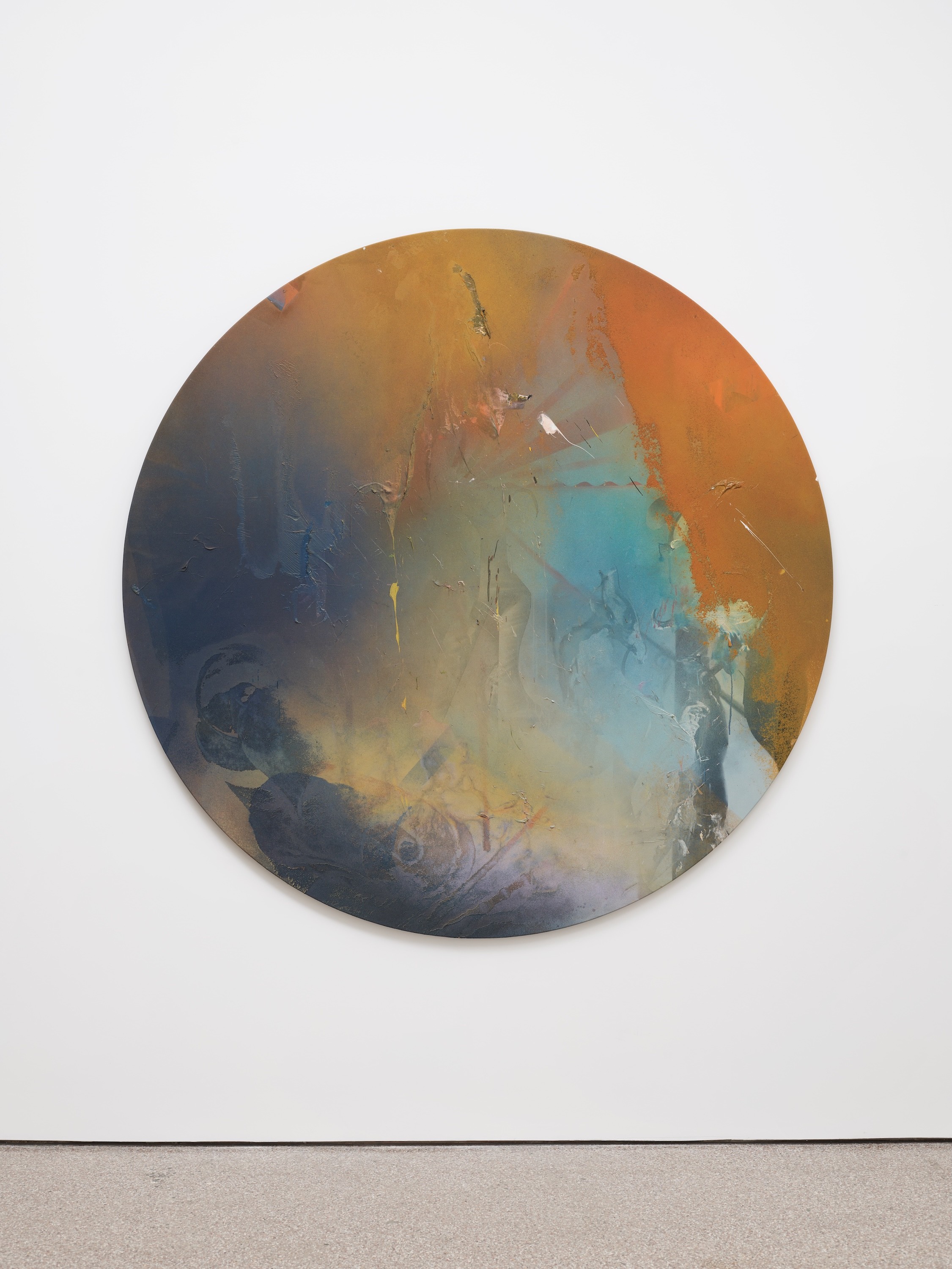
Liam Everett’s recent body of work, presented in the exhibition He Loved Him Madly, continues his exploration of painting as an accumulative, almost fugitive practice — one where process, erasure, and material transience coalesce into resonant, unstable surfaces. The exhibition centers on a series of large-scale tondos (circular canvases, each approximately 195 cm in diameter), alongside other more intimately scaled works, all of which bear the traces of Everett’s laborious, ritualistic methods. His paintings emerge through cycles of application and removal, ayers of pigment, salt, alcohol, and solvents are worked, distressed, and partially effaced, leaving behind luminous, palimpsestic fields that hover between presence and dissolution.
The exhibition’s title, He Loved Him Madly, borrowed from Miles Davis’s haunting 1974 elegy for Duke Ellington, suggests an undercurrent of devotion, loss, and improvisational intensity — themes that resonate with Everett’s approach.
Like Davis’s composition, which unfolds through slow, shifting repetitions, Everett’s paintings operate in a space of gradual revelation, where meaning is deferred and the act of looking becomes a durational experience. The tondos, in particular, with their allover, non-hierarchical compositions, evoke celestial orbs or weathered artefacts, their surfaces at once geological and ephemeral.
Artist Talk with Liam Everett
Jean-Luc Moulène
Three years after his last exhibition at Galerie Greta Meert, Jean-Luc Moulène presents a new set of works that extend and deepen the research he began at that time. This exhibition acts as a focus, a zoom into the very substance of his previous work, a magnification of observations, tensions and rotations.
Comprising nine new works, the collection displays a diversity of materials (glass, concrete, steel…) that resonate within the gallery space. The forms seem animated by the same movement: they turn, pivot, respond to each other and, as the artist points out, ‘through rotation, they seek to escape language’.
This circulation is not merely a formal gesture: it conveys a dynamic of emancipation in which thought becomes volume and matter becomes the vehicle of a silent, dense and concrete language. The works engage in dialogue with each other through their movements and the voids that separate them, exploring how forms confront, evade or balance each other in space.
The exhibition thus presents itself as a field of forces, a space of relationships rather than a simple arrangement of works. Each revolves around an invisible centre, acting as a mirror or counterweight, contributing to a rigorous but elusive whole, a mechanism in continuous motion where form, gravity and thought merge.
Artist Talk with Liam Everett
Jef Geys
Artist Talk with Liam Everett
Richard Tuttle
For over six decades, Richard Tuttle has cultivated a practice that resists categorisation, existing in a space perpetually between painting, sculpture, and poetry. His is a career defined not by the consolidation of a signature style, but by a continuous, restless process of questioning. This exhibition presents two distinct bodies of work, separated by time yet united by a shared philosophical inquiry. Together, they form a diptych of extremes: one intensely personal and held in a state of suspension, the other rigorously experimental and grappling with the very foundations of being. The hinge upon which these two pillars turn is the exhibition’s titular provocation: Nothing.
The first series, completed four to five years ago, arrives in the gallery space only after a prolonged period of latency. For Tuttle, the act of creation does not only conclude in the studio. It is a living process that extends to the moment of encounter. For years, this body of work lacked its necessary counterpart, the right conditions for revelation. The artist’s recent realisation of how these pieces must be installed is not merely a logistical decision; it is a final, crucial step in their creation. To encounter them here is to witness a work finally coming into its own being, emerging from a period of private gestation into public dialogue. There is an intimacy to this series, a sense of having been held close, that imbues it with a profound, personal gravity.
In stark contrast, the second series represents Tuttle’s most current investigations, described by the artist as being truly experimental. Here, the personal recedes, replaced by a struggle with elemental problems. The artist speaks of wrestling with “foundation,” a term he explicitly links to its philosophical weight, the equivalent of “ground.” In an era where art is often reduced to a commodity, a decorative object, or an instrument of financial speculation, Tuttle’s new works mount a quiet but fierce defence of the discipline itself. They are made in defiance of a cultural tide that discounts art’s deeper purpose, fighting for respect against those who would belittle its essential inquiry. This series is devoid of personal narrative, pushing instead toward a metaphysical level where the individual frame of mind might intersect with the vast, impersonal cosmos.
The dialogue between these two poles, the deeply personal and the radically impersonal, generates the exhibition’s unique tension. The title, Nothing, serves as a challenging lens through which to view this conversation. It is a term that can be both a void and a plenum, an absence and a potential. In the context of our current cultural moment, which often demands instant legibility and decorative consumption, Nothing stands as a gentle provocation, perhaps even a quiet mockery. It directs our gaze away from matter that merely plays a substantive or decorative role, steering us instead toward a meta-level of experience, toward the conditions that allow art to exist at all.
This trajectory is emblematic of Tuttle’s unprecedented radicalism. A position that does not age into comfort or nostalgia. Even as his work occupies the highest echelons of museum collections worldwide, it continues to challenge the assumptions of the youngest and most disruptive artistic circles. This is because his practice has always maintained a deep, non-resistant attitude toward chaos. He does not seek to impose order upon the formless, but rather to find a space of resonance within it. His work is an act of acceptance, a respectful dance with the uncertain.
Spanning decades of museum and institutional presence, Richard Tuttle’s career is a monument to the idea that true artistic progression lies not in looking back, but in perpetually stepping into the unknown. With Nothing, Galerie Greta Meert invites the viewer to join him in that step, to move away from the popular and the tangible, to contemplate the ground upon which art, perhaps meaning itself, is built.
Artist Talk with Liam Everett
Downtown - Gallery
Rue du Canal 13, 1000 Bruxelles
Visit the website
Over the past 35 years, Galerie Greta Meert established itself as one of Brussels’ leading contemporary art galleries. Founded in 1988 as Galerie Meert Rihoux, it was subsequently renamed in 2006. In recent years, founding director Greta Meert started to run the gallery collaboratively with her son Frédéric Mariën. Located in the center of Brussels, the gallery occupies a five-story Art Nouveau building designed by Louis Bral and renovated for the gallery by renowned Belgian architects Hilde Daem and Paul Robbrecht. Since 2012 three floors of the building are dedicated to exhibitions, making it possible to maintain an expanded exhibition schedule.
In 1988, Galerie Greta Meert opened with Thomas Struth’s first international showing followed by exhibitions with Robert Mangold, Richard Tuttle, Louise Lawler, John Baldessari and Hanne Darboven. In 1992, the gallery presented Isa Genzken’s early sculptures and started to show the work of Donald Judd. These first exhibitions demonstrate the gallery’s aim to bring forth the work of these innovative artists at a time when they were still relatively unknown in Belgium. From the very beginning, one of the main focuses of the gallery has been on Minimal and the Conceptual Art. The significance of photography in conceptual strategies has also been a substantial interest in the programming of the gallery throughout the years. As early as 1991, Galerie Greta Meert was one of the first European galleries to show artists such as Ian Wallace, Jeff Wall and Ken Lum who have collectively been referred to as the Vancouver School.
During the 1990s and early 2000 the program was further developed around the work of artists like Carl Andre, Robert Barry, Jef Geys, Peter Joseph, Shirley Jaffe, Sol LeWitt, Jean-Luc Moulène, Fred Sandback, Niele Toroni, Didier Vermeiren and Michael Venezia. Concurrently, the gallery has played an important role in the rediscovery of an older generation of Italian artists who had been eclipsed by the Arte Povera movement. These artists notably include Carla Accardi, Gianfranco Baruchello, Enrico Castellani and Mimmo Jodice.
In more recent years the gallery has also become committed to a younger generation of Belgian and international artists whose work builds on the gallery’s distinctive artistic identity and historical standpoint: Eric Baudelaire, Katinka Bock, Iñaki Bonillas, Nathalie Du Pasquier, Liam Everett, Johannes Esper, Valerie Krause, Anne Neukamp, Magali Reus and Johannes Wald, together with the Belgian artists Edith Dekyndt, Sophie Nys, Koen Van den Broek, Catharina van Eetvelde and Pieter Vermeersch.